Guest: Prof. Dr. Cengiz İskender Özkan
The sixth event in the “Philosophy Gatherings at Pamukkale University (PAÜ)” series, initiated by the Department of Philosophy at the Faculty of Humanities and Social Sciences (İTBF) of Pamukkale University, was held with the participation of Prof. Dr. Cengiz İskender Özkan from Aydın Adnan Menderes University.
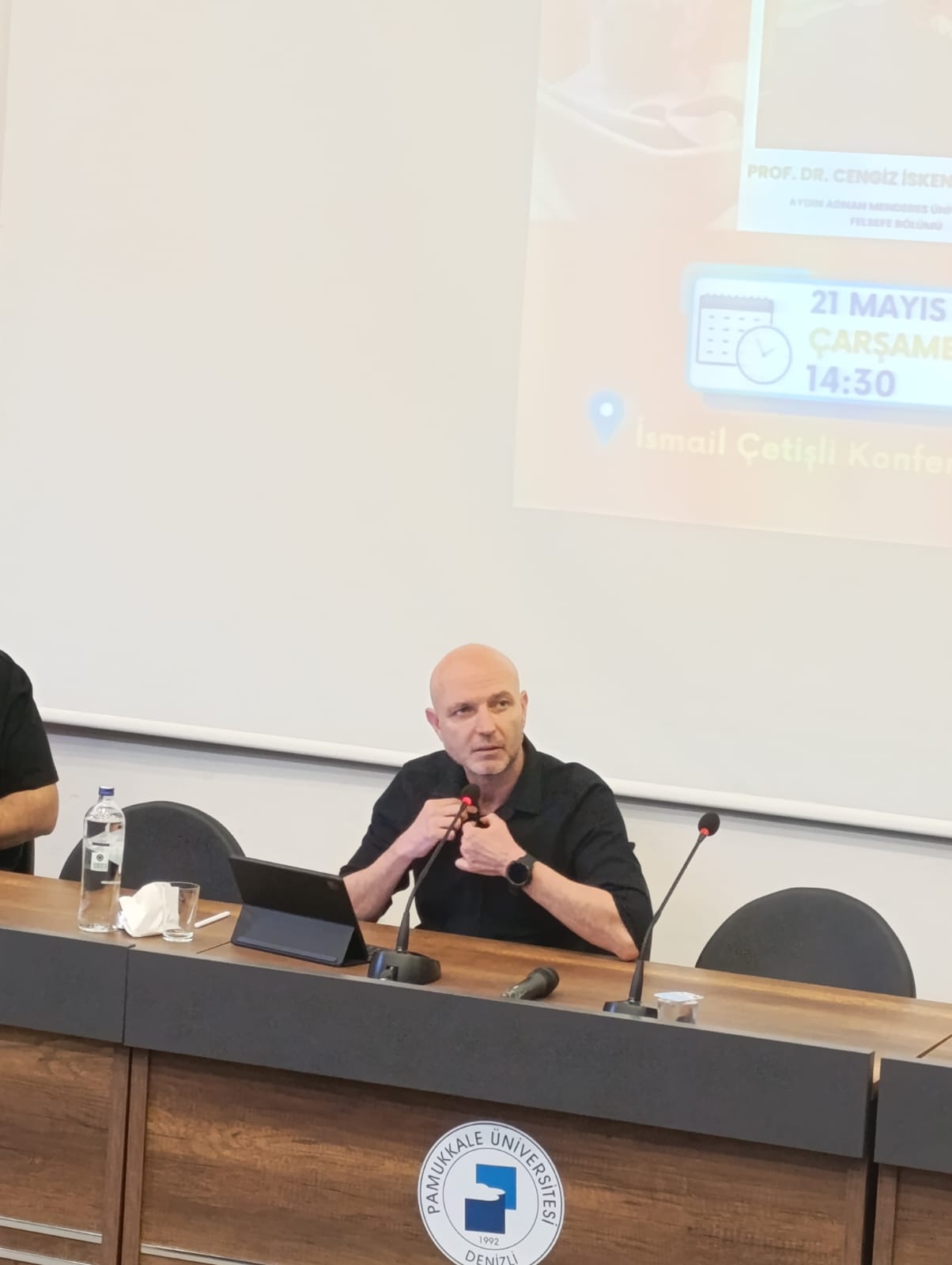
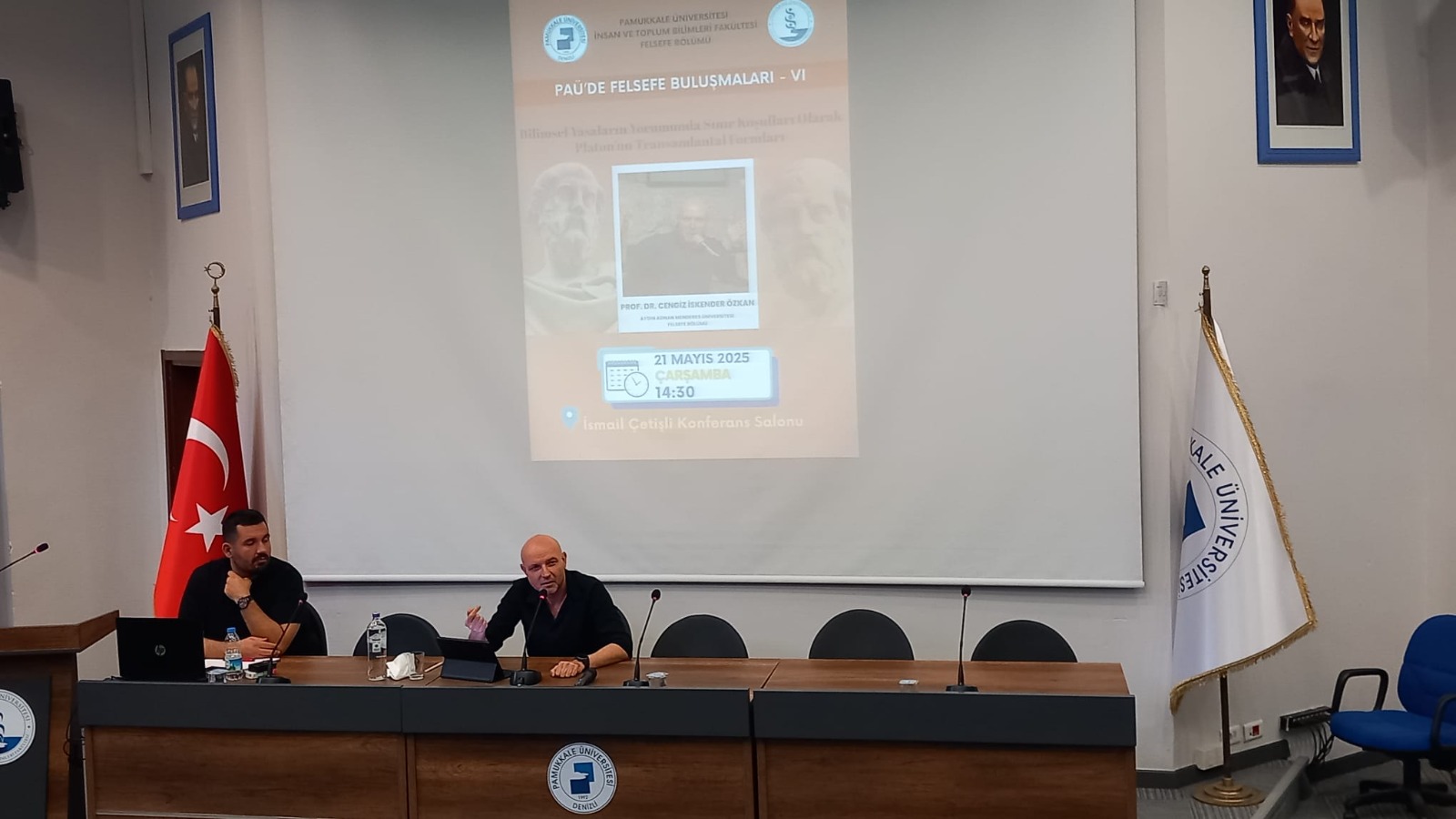
Organized by the Department of Philosophy at the Faculty of Humanities and Social Sciences at Pamukkale University, the sixth session of the “Philosophy Gatherings at PAÜ” series took place on May 21, 2025, at 14:30 in the Prof. Dr. İsmail Çetişli Conference Hall. The event began under the moderation of Research Assistant Bahadır Söylemez and featured a presentation by Prof. Dr. Cengiz İskender Özkan titled “Plato’s Transcendental Forms as Boundary Conditions in the Interpretation of Scientific Laws.”
Beginning his talk with the question, “What can we gain by approaching contemporary philosophy of science through Plato?”, Prof. Dr. Cengiz İskender Özkan framed the main issue of his presentation as exploring the possibility of interpreting contemporary philosophy of science—and specifically the problem of boundaries—through the philosophy of Plato. To examine Plato’s philosophy in this context, he drew on commentators such as Alfred Taylor, Alexandre Koyré, and Jean Brun.
He first emphasized the importance of the concepts of “experiment/experience” in Plato and suggested that these concepts can serve as a link between the philosophy of science and the boundary problem. Referencing Plato’s dialogues Phaedo, Republic (Politeia), and Timaeus, Prof. Dr. Özkan discussed Plato’s concept of Ideas by examining the distinction between “what is” and “what is in the process of becoming,” as well as the division between the intelligible and the perceptible.
He pointed out that according to Plato, to know is to see with thought, and based on the distinction between the “calculable” and the “incalculable,” one can only define a composite structure—within which the calculable component corresponds to form or structure. Considering the role of calculability in Plato’s theory of science, he noted that this connects fundamentally with mathematics. The presence of pure logical form, he argued, is found here; and the reason why disciplines such as physics yield only “approximate” rather than “exact” results stems from this foundation.
Prof. Dr. Özkan concluded by stating that Plato’s theory of Ideas resonates with contemporary science through a parallel between “lawfulness” and “conformity to forms.” However, he emphasized that complete “conformity” in the sensory world is not possible.
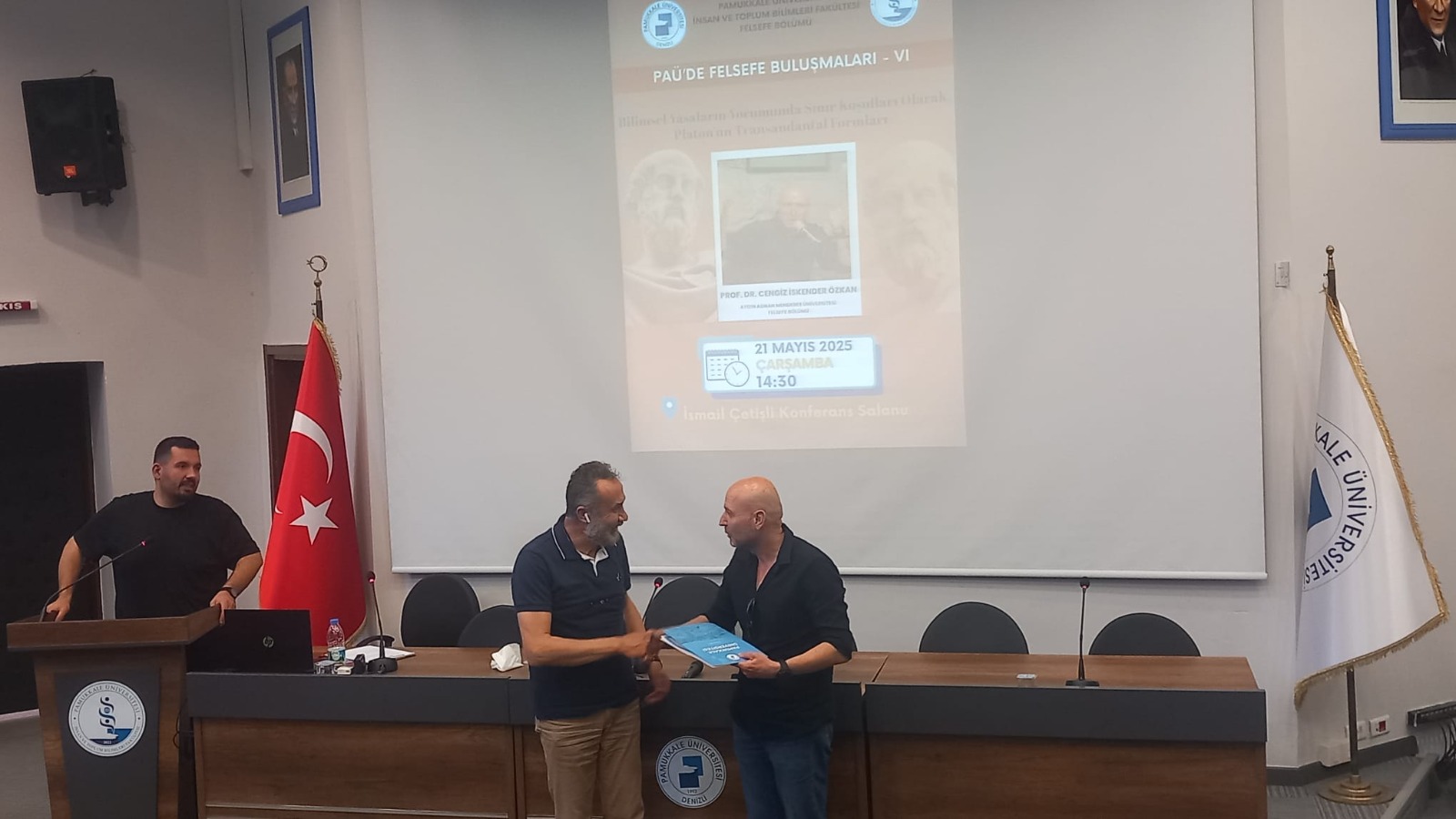
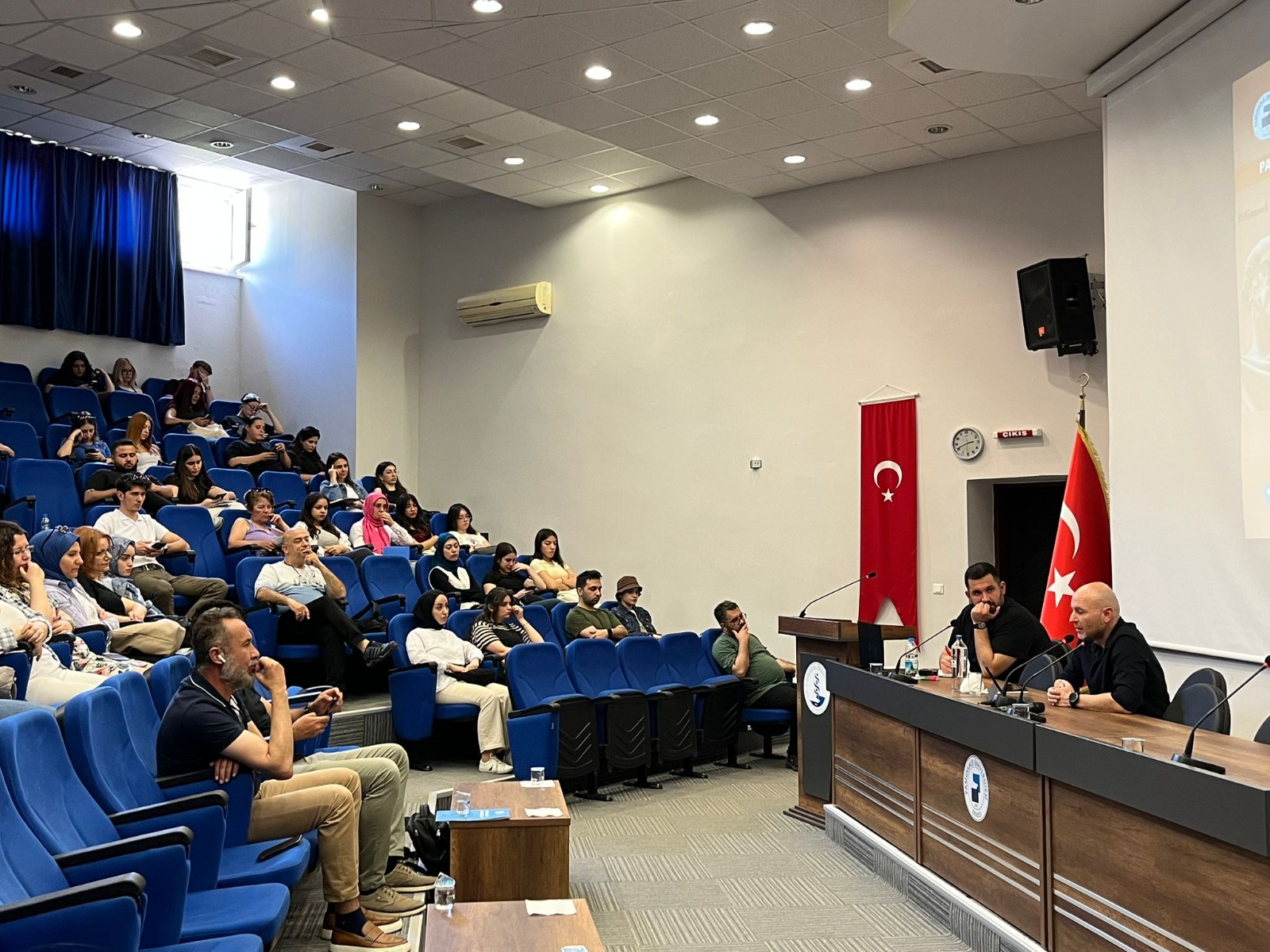
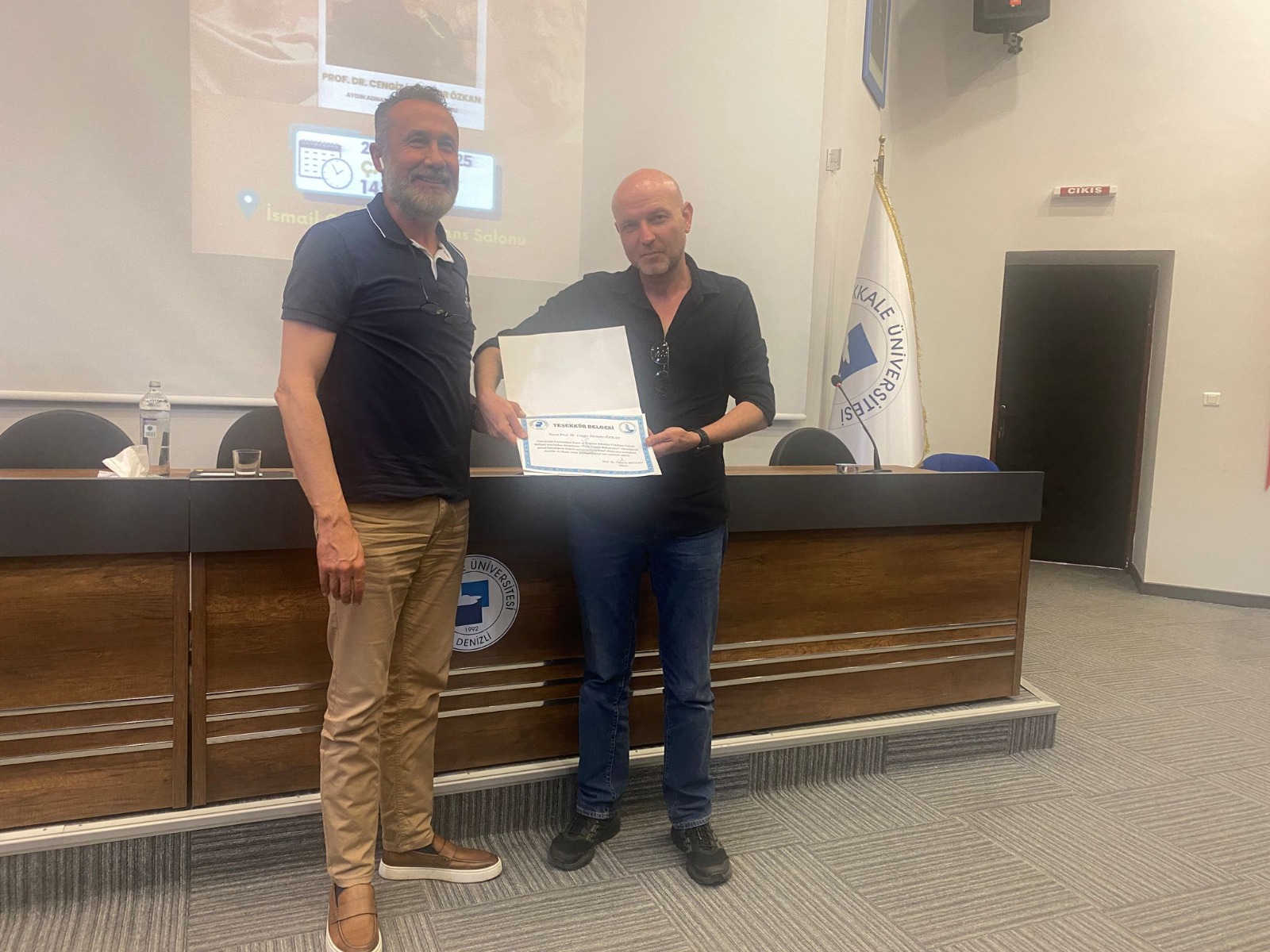
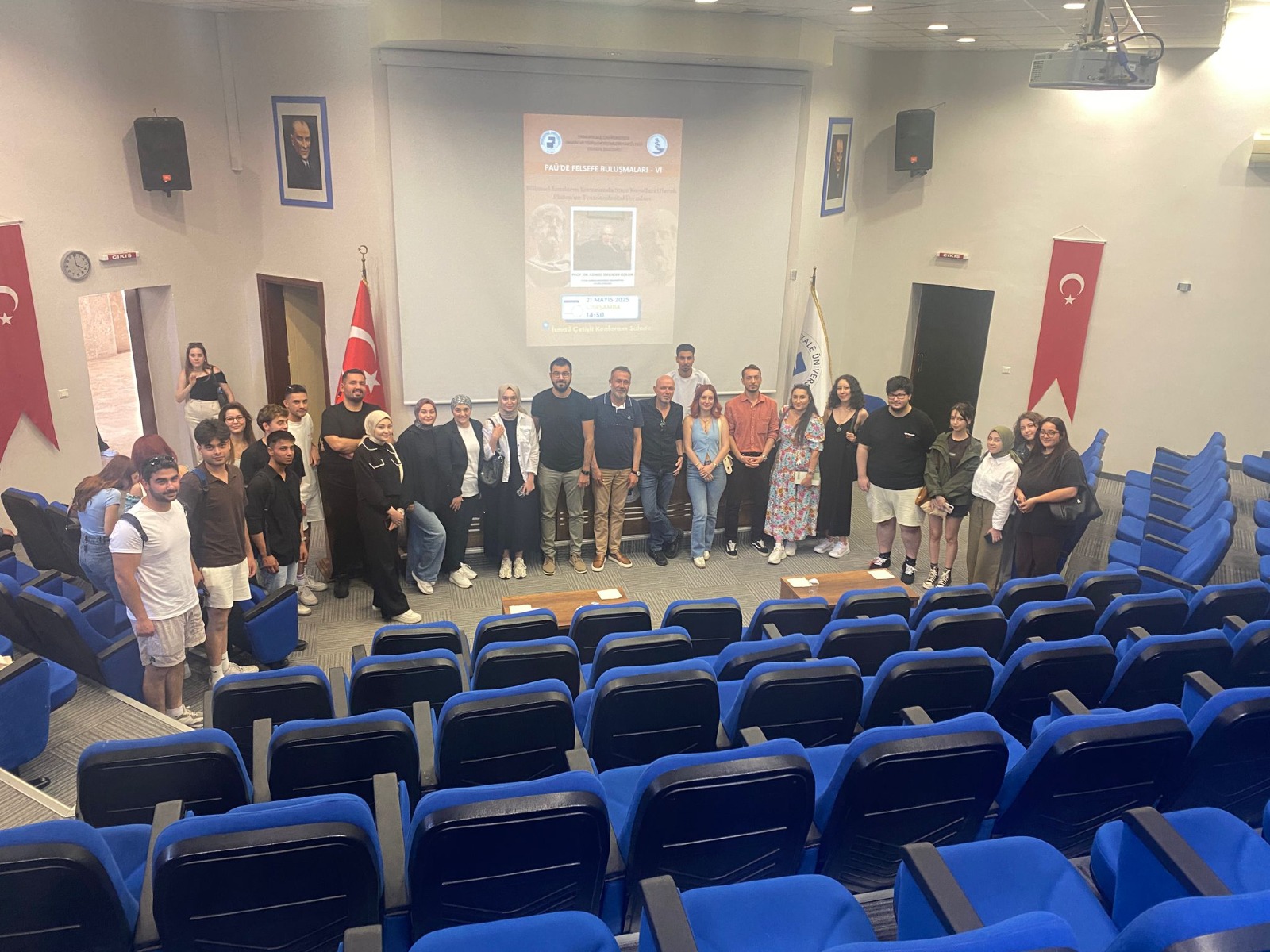
After the talk, attendees contributed with questions, fostering a lively and philosophical discussion. Following the Q&A session, Prof. Dr. Mehmet Ali Sarı, faculty member of the Department of Philosophy at Pamukkale University’s Faculty of Humanities and Social Sciences, presented a certificate of appreciation to the speaker. Additionally, Assoc. Prof. Dr. Alper Bilgehan Yardımcı, Chair of the Event Planning and Organization Committee of the PAÜ Philosophy Department, presented a gift to Prof. Dr. Cengiz İskender Özkan on behalf of the department.