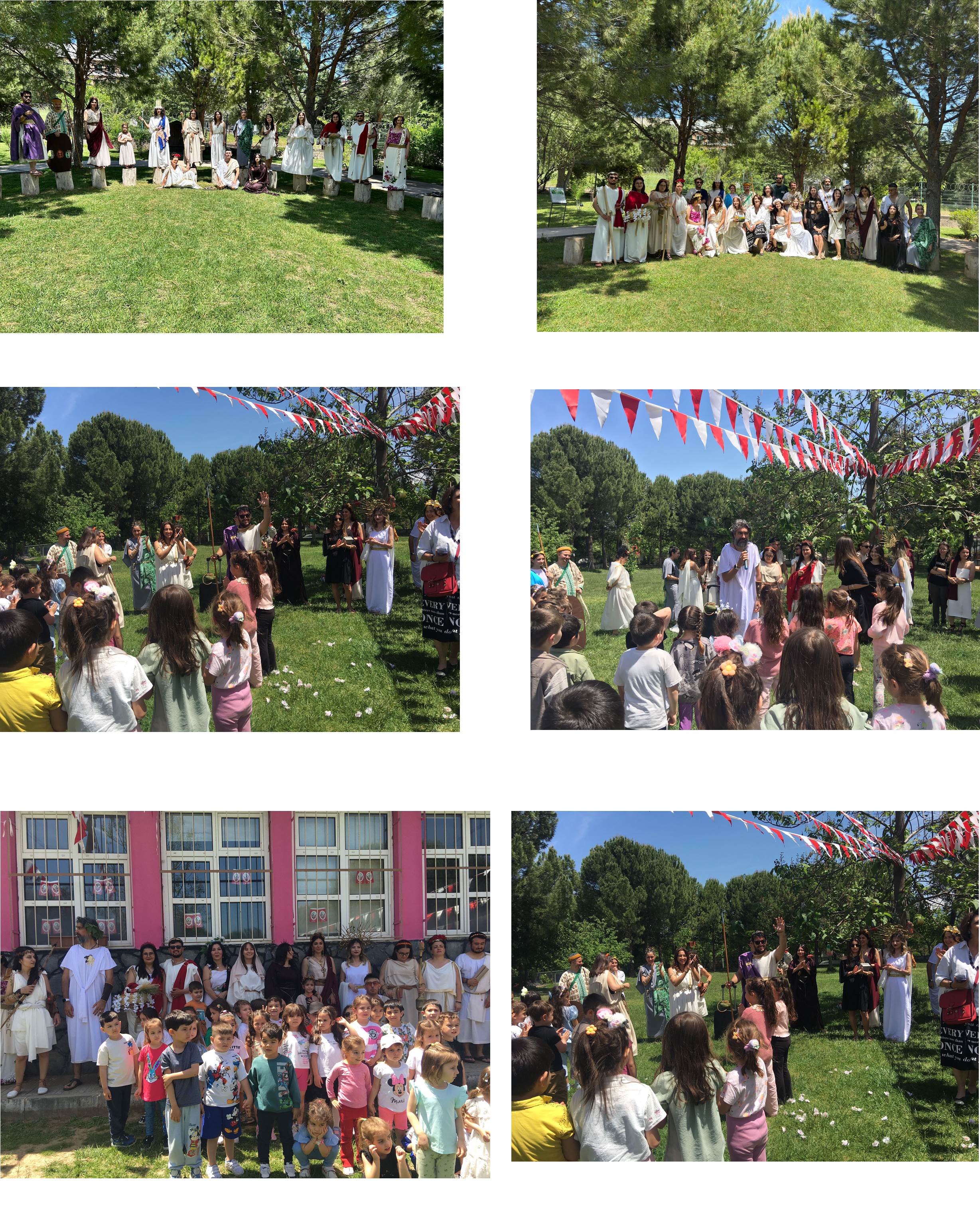
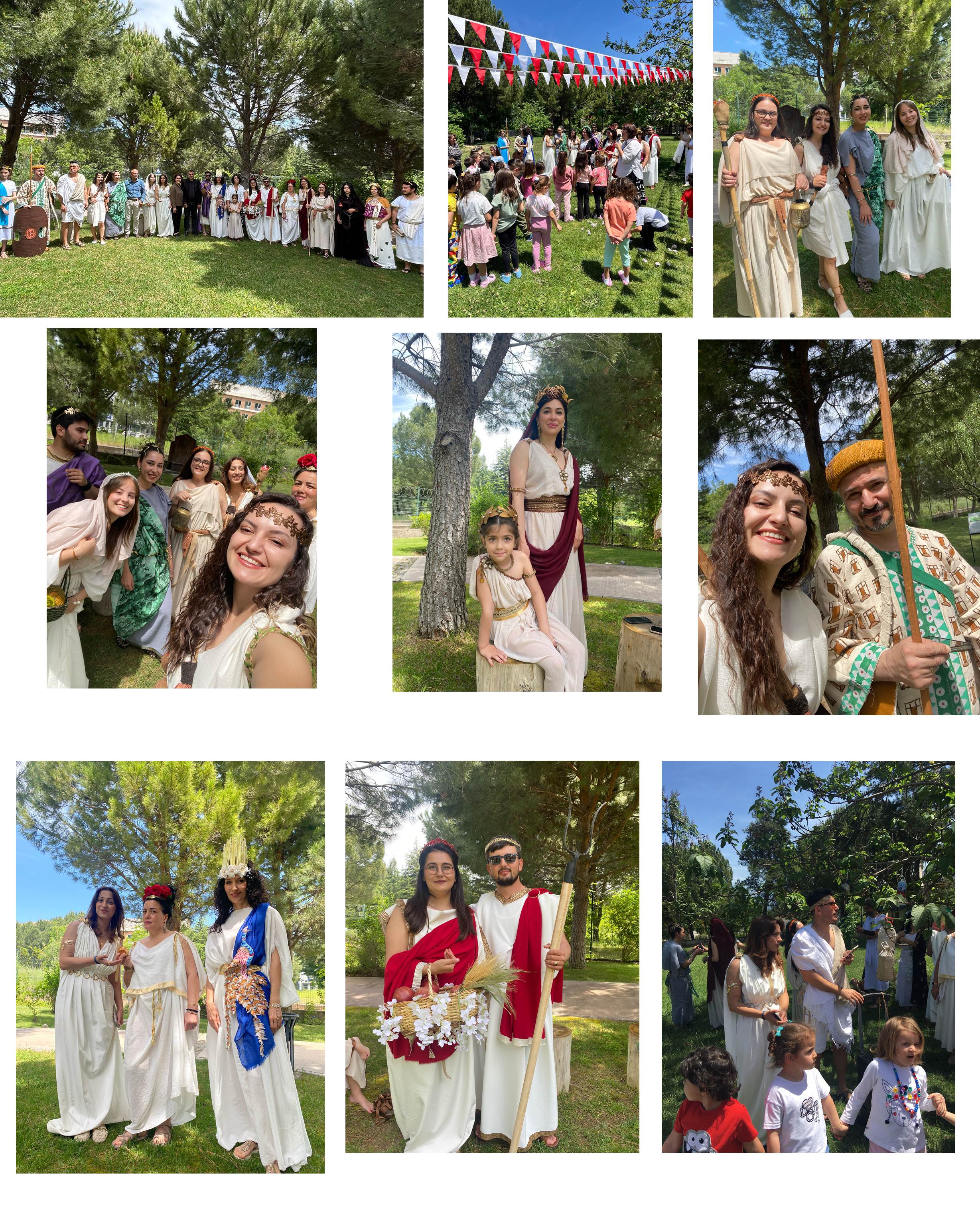
With the arrival of spring, Pamukkale University hosted the annual Ancient Clothing Contest, organized by Prof. Dr. Elif Özer as part of her "Archaic and Classical Period Sculpture II" course in the Department of Archaeology. This traditional event showcased the creativity and hard work of the archaeology students, who participated in teams to design and create costumes based on ancient Greek and Roman clothing styles, using Denizli textile materials.
The costumes presented in the competition represented figures from Greek mythology as well as garments that were worn by the people of ancient Greece in their daily lives. The students carefully crafted these outfits, bringing historical clothing to life with a modern touch, and each piece reflected the richness of ancient culture.
The festival was attended by a diverse group of participants, including students and teachers from the PAÜ Children's University Kindergarten, as well as numerous academics, administrative staff, and students from various departments of the university. For the first time, the event took place in the PAÜ Botanical Garden, providing a beautiful natural setting for the contest.
The main goal of the competition was to enhance the understanding of ancient Greek and Roman social life among the archaeology students. It also aimed to raise awareness among a wider audience by showcasing the clothing worn by people who lived thousands of years ago in these lands. Following the competition, the archaeology students visited the Fahri Akçakoca Kindergarten, where they presented the event to the young children, teachers, and parents. This initiative helped introduce the ancient history of Denizli to local children and raised awareness about the region's ancient heritage.
Each year, the Department of Archaeology contributes to both the academic and social life of the community through such activities, promoting the knowledge of ancient civilizations and fostering a deeper connection with the past. These initiatives, including excavations and public outreach programs, serve as a meaningful way to engage the community and encourage a broader understanding of the ancient world.