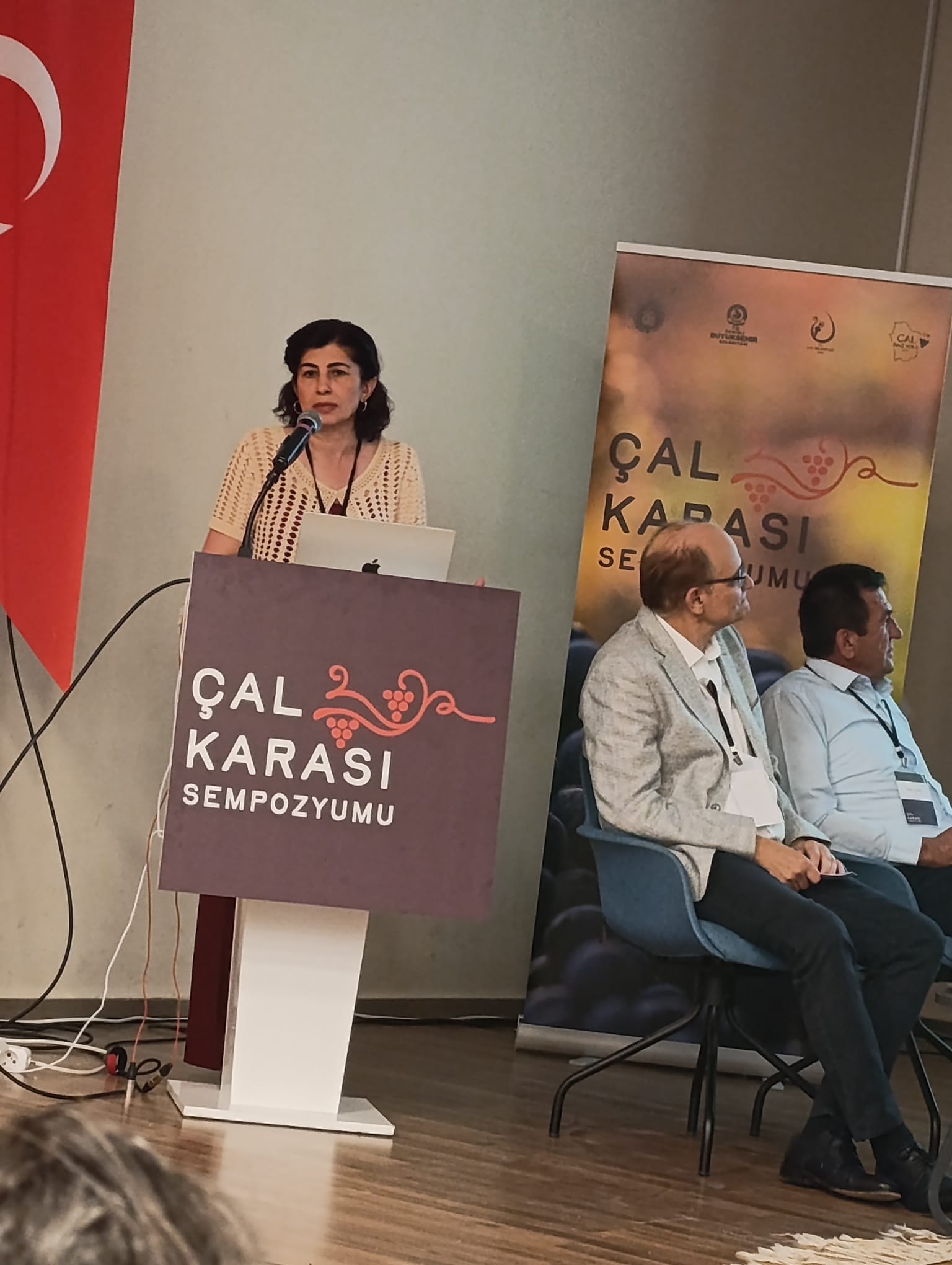
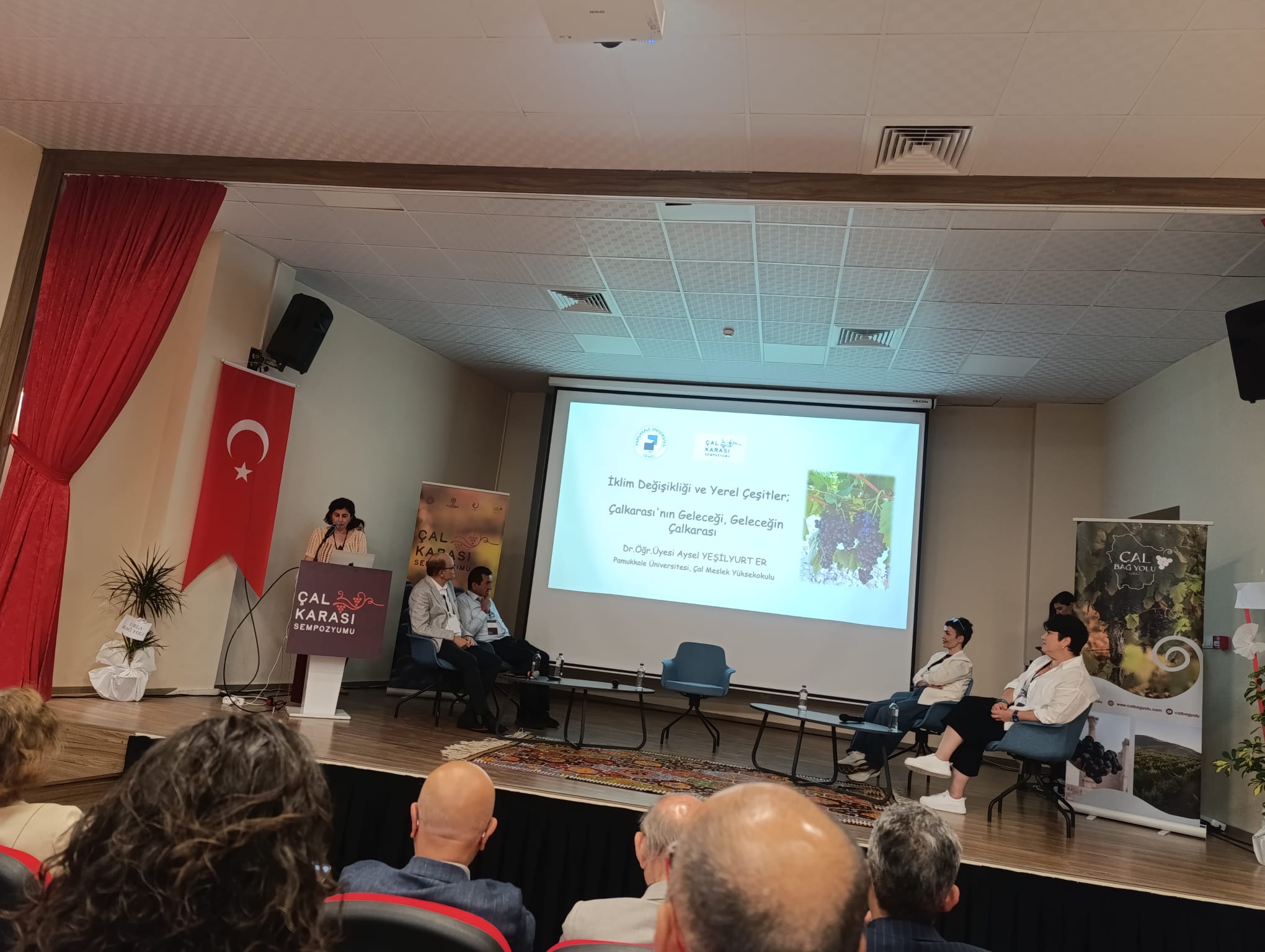
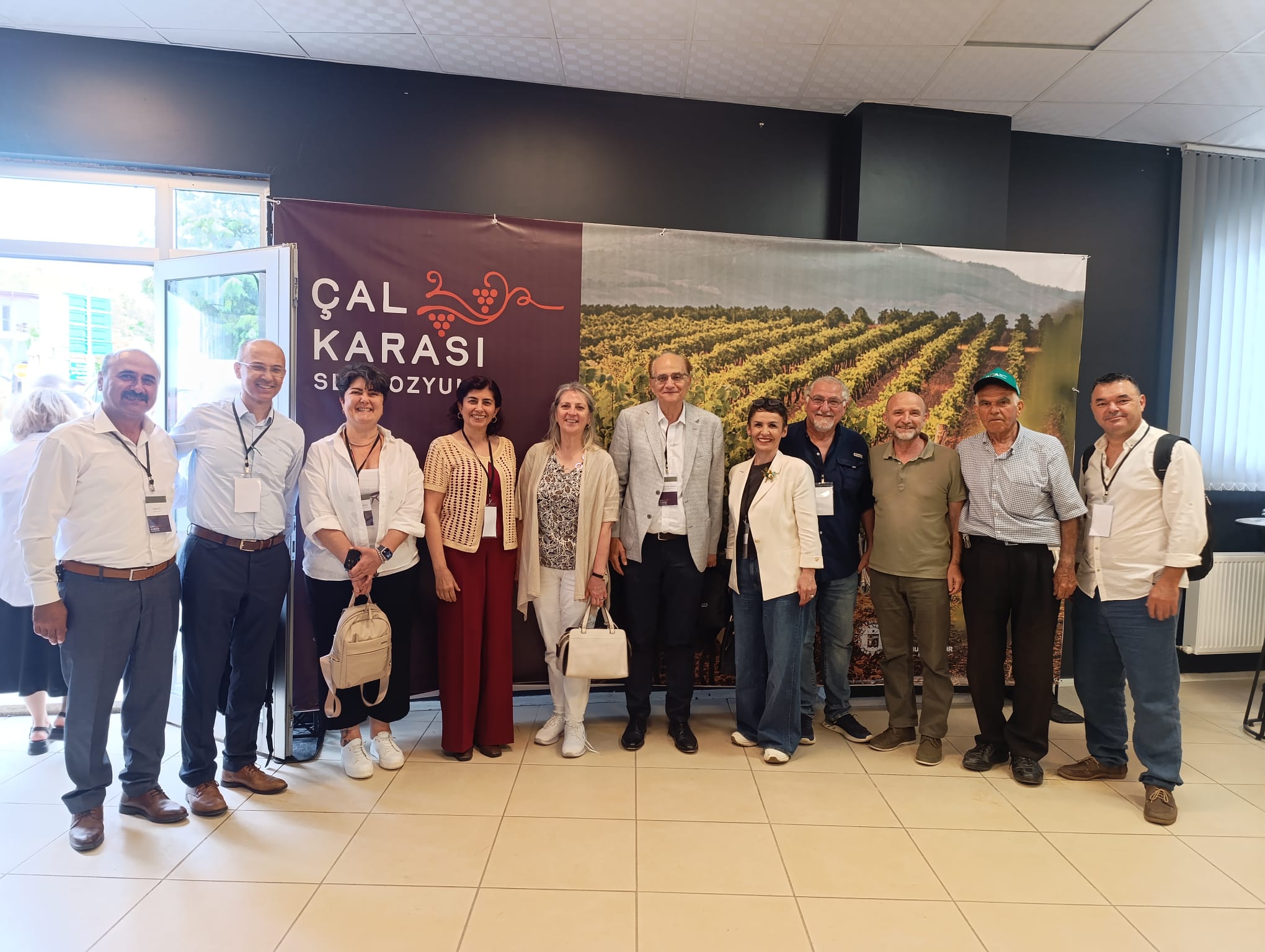
Asst. Prof. Dr. Aysel Yeşilyurt Er, a faculty member at Pamukkale University Çal Vocational School, participated in a comprehensive event that highlights the region's viticultural memory and made thought-provoking evaluations regarding the future of agriculture.
Organized by the Çal Vineyard Route and supported by the Çal District Governorate, Denizli Metropolitan Municipality, and Çal Municipality, the first Çalkarası Symposium was held on Saturday, June 20, 2026, at the Çal Youth Center. This important gathering, which brought the region's viticultural memory and potential to the forefront, brought together academicians, vineyard growers, agriculture and food experts, tourism professionals, industry representatives, and the local community. During the event, where the hall was completely full throughout the day, the Çalkarası grape was discussed from the perspectives of history, viticulture, food technologies, tourism, and regional development.
Our Strongest Weapon Against Global Climate Change: The Right Variety Selection
The second session of the symposium, titled "Çalkarası Evaluated from the Viticulturist's Perspective," was moderated by Prof. Dr. Ahmet Altındişli. Taking part as a panelist in this session, Asst. Prof. Dr. Aysel Yeşilyurt Er made significant evaluations on the preservation of old vineyards, sustainable viticulture, and the resilience of Çalkarası against changing climate conditions.
Stating that local varieties are not just a legacy of the past, but genetic guarantees that will shape viticulture in the age of climate change, Dr. Yeşilyurt Er highlighted the following points in her speech:
- The most critical aspect of the measures to be taken against risks such as rising temperatures and early budding caused by climate change is the correct selection of varieties.
- Although foreign varieties are becoming widespread today, their future performance is uncertain. At this point, Çalkarası shows an extremely high tolerance to stress with its structure adapted to the hot and dry ecology of the region and its ability to be grown without irrigation.
- In order to carry Çalkarası further, projects supported by TÜBİTAK and GEKA are being carried out, and the grape's quality for processing into value-added products is being researched.
- 150-year-old traditional types are being propagated through tissue culture, and their drought resistance is scientifically examined.
The symposium once again demonstrated that Çalkarası is not only a local grape variety that needs to be protected but also a strong regional value that can be carried into the future through scientific research and value-added production. As Çal Vocational School, we congratulate our faculty member, who blends our regional heritage with a modern agricultural vision through her scientific studies, and we wish her continued success.