LATRINE
The Latrina, built in the 2nd century AD, has a peristyle plan type and is approximately 40 m2 in size with a capacity of 44-46 people. Roman toilets can be divided into two groups: public and private. Excavated in 2019 and restored in 2021, this latrina is a public building. During the years of Emperor Vespasian's rule, lavatories became an important source of income for the imperial, since they began to charge an entrance fee.
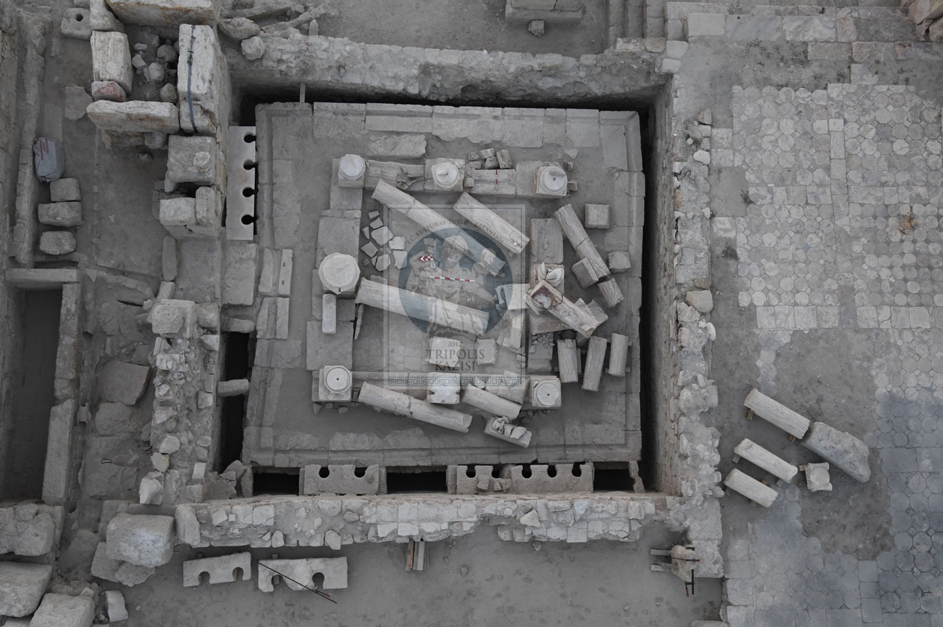
The abundant water used for the adjacent Monumental Fountain located next to the toilet and the water collected in the pool created next to the southwestern corner of the south wing of the fountain were used to clean the toilet at the same time.
In a "standard" public toilet water flowed in two channels. One was under the seats to flush away the faeces. Another conduit of water flowed in front of the seats. Water in this conduit was used to moisten materials, which were used to rinse one's bottom. T hey probably commonly used sponges, moss, strips of doth or something similar, which was moistened in the conduit in front of the seat and then üşed to rinse their bottoms. in both types of Roman latrines were indeed not hygienic according to modern standards, as a result, intestinal diseases were ubiquitous.
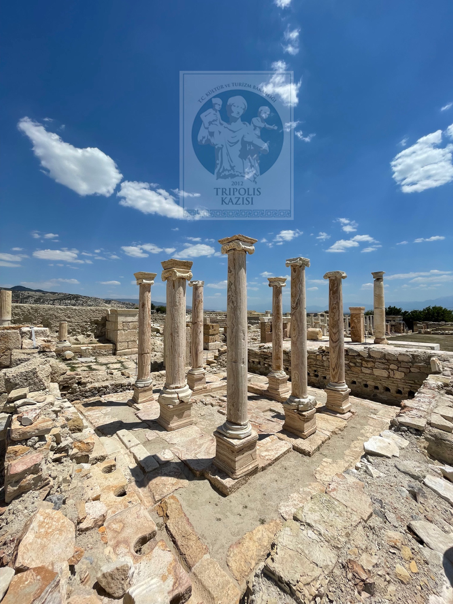
After the severe earthquakes, an intensive renovation process started in the City, and thus the destroyed buildings in the City center were brought back to their feet by using spolia blocks. These natural disasters also affected the Latrina and the spolia blocks üşed in its walls are the result of the renovations the building underwent in the 4th and 5th centuries AD.