Colossae, located in the southeastern part of the Lykos (Çürüksu) Valley, lies approximately 25 km east of the city center of Denizli, about 4 km north of the district of Honaz, and along the Aksu Stream. Situated at a key point on the route leading westward to Ephesos and northward to Sardis, the city possessed abundant water resources and fertile agricultural lands.
This location places Colossae at the eastern end of the Lykos (Çürüksu) Valley, within a transitional zone between the foothills of Mount Honaz (ancient Cadmus) and the alluvial plain. On the one hand, the city stood along the route connecting the Denizli basin westward to the Aegean coastal port cities—particularly Ephesos and Miletos. On the other hand, it occupied a strategic nodal point at the intersection of overland routes extending eastward toward the interior via Apameia Kibotos (modern Dinar) to the Central Anatolian plateau, and northwestward through Sardis toward the Propontis (Marmara region).
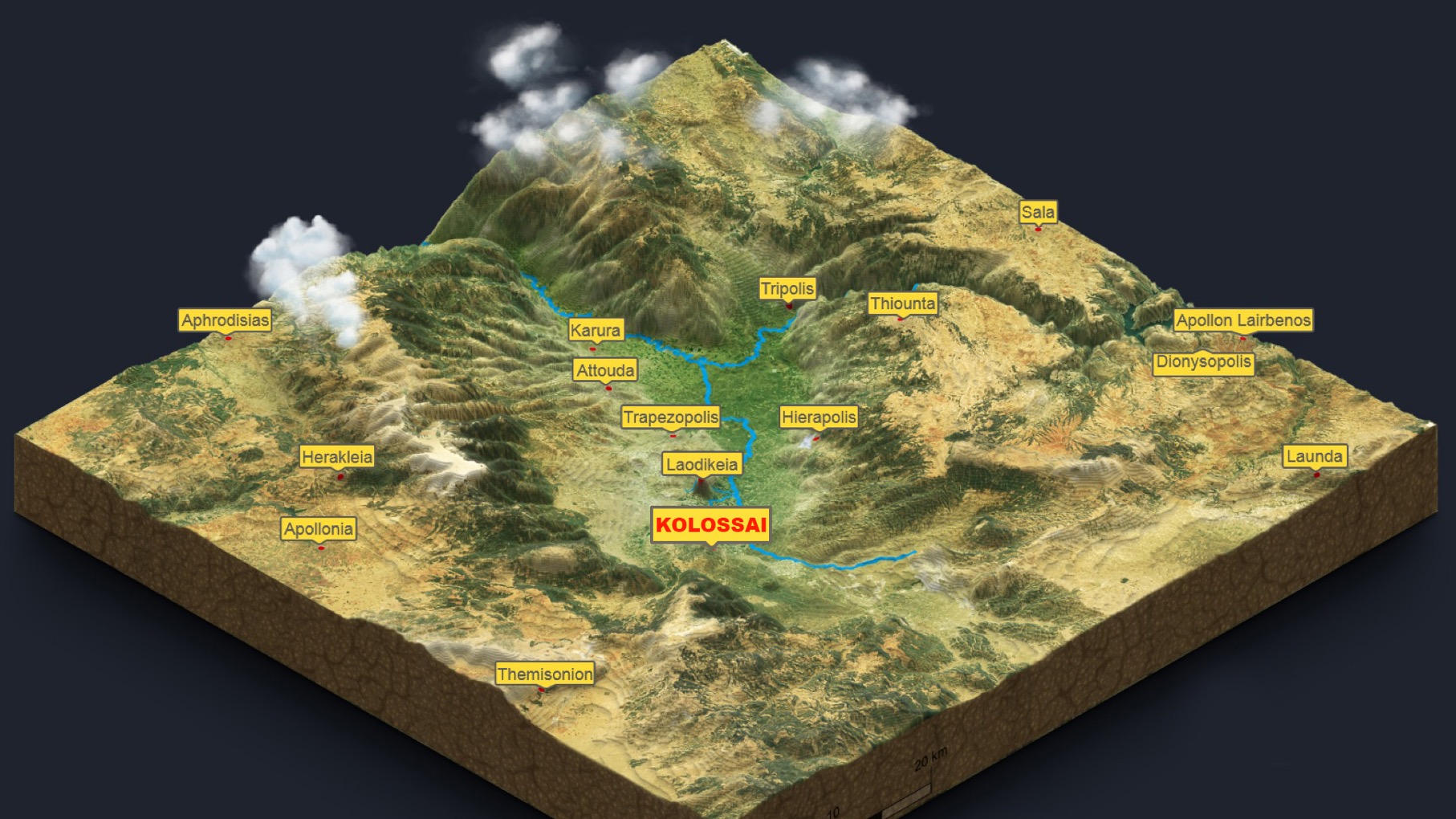
Colossae within the Lykos (Çürüksu) Valley (Map credit: D. Peçen)
Colossae’s location along the Aksu Stream indicates a landscape in which agriculturally favorable alluvial soils converge with the abundant water resources descending from the mountain slopes. This sector of the Lykos Valley, in light of both ancient and modern observations, represents a characteristic example of an inner western Anatolian valley, consisting of a fertile plain suitable for irrigated agriculture framed by surrounding mountain ranges. The mass of Mount Honaz (ancient Cadmus) influences both the climatic and hydrological dynamics of the region, creating a microclimatically favorable environment that must have provided a sustainable ecological foundation for ancient settlement.
From a geological perspective, Colossae is situated near the eastern end of the Denizli graben system, formed under the influence of the extensional tectonic regime of Western Anatolia. It lies within a geographical framework characterized by active fault zones, travertine formations, and intense hydrothermal activity. As also noted in ancient sources—particularly in the descriptions of Strabo concerning seismicity and subterranean cavities—this geodynamic structure indicates that the region possessed both abundant water resources and a crustal composition highly susceptible to frequent earthquakes. Thus, while the selection of the site appears rational in terms of fertile soils, water availability, and control of transit routes, it simultaneously entailed a continual coexistence with seismic risk.
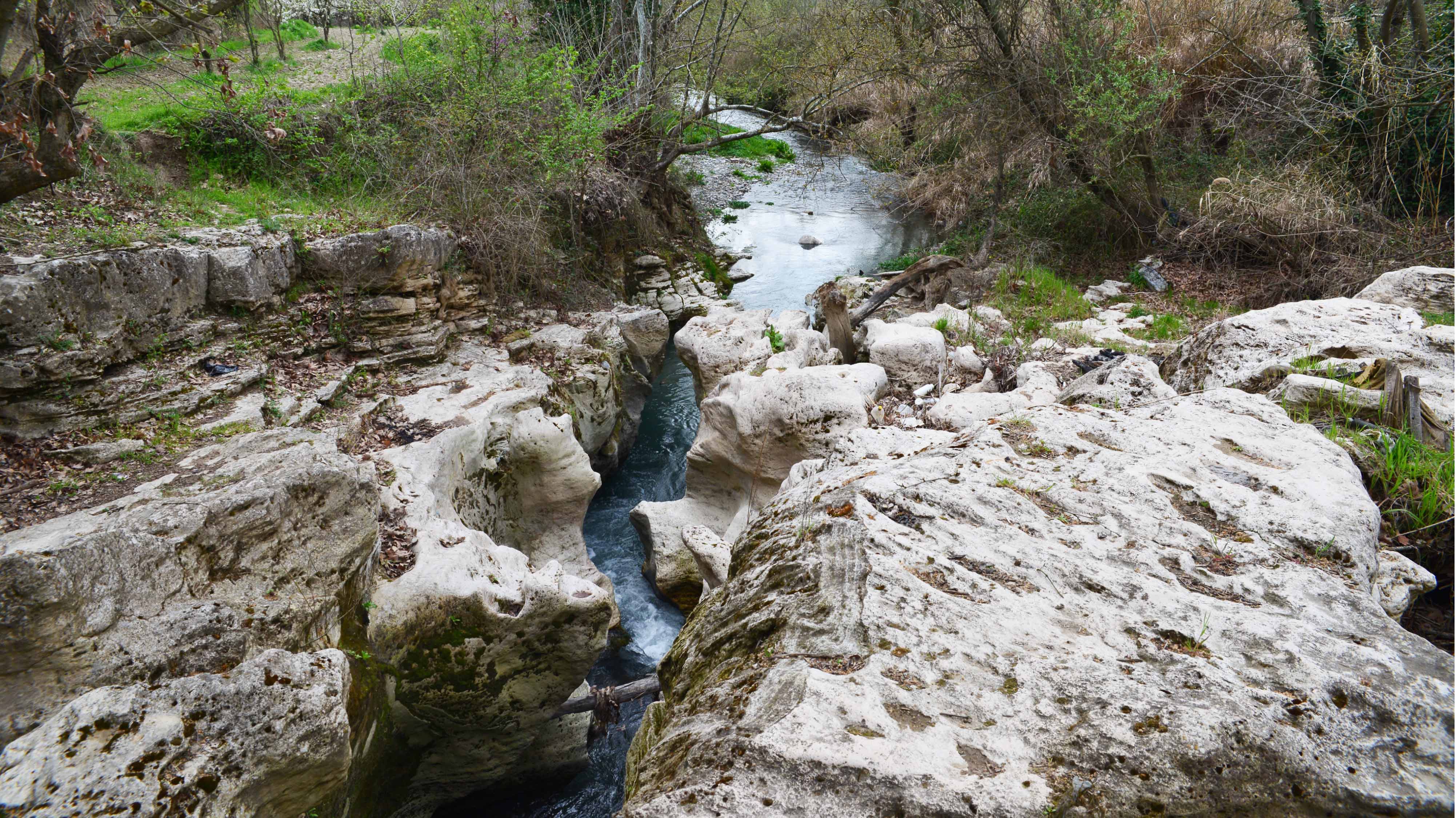
The Aksu Stream Flowing beside Colossae (Photo credit: B. Yener, 2021)
“In Colossae, a great city of Phrygia, the River Lykos falls into a chasm in the earth and disappears from sight; after an interval of about five stadia (approximately 800–900 m), it re-emerges and continues its course, eventually flowing into the Maeander.” (Herodotus, Hist. VII, 30)
This geographical position rendered Colossae not only significant within the context of the Lykos Valley, but also a major nodal city within the broader inland–coastal networks of Western Anatolia. It functioned both as a station and logistical point along military and administrative routes, and as a settlement with access to natural resources favorable for agriculture, animal husbandry, and textile production.