The first systematic excavation season at the ancient city of Colossae was conducted between 7 July and 30 December 2025, with the permission of the Republic of Türkiye Ministry of Culture and Tourism and under the supervision of the Ministry’s representative. Since the site had not previously been subject to systematic excavations, and because the risk of illicit digging and damage remained high in certain sectors, the North Necropolis was designated as the priority intervention area in the 2025 work programme. This decision was strategically important both for documenting the existing disturbances in a scientific manner and for safeguarding the area and preparing it securely for subsequent seasons.
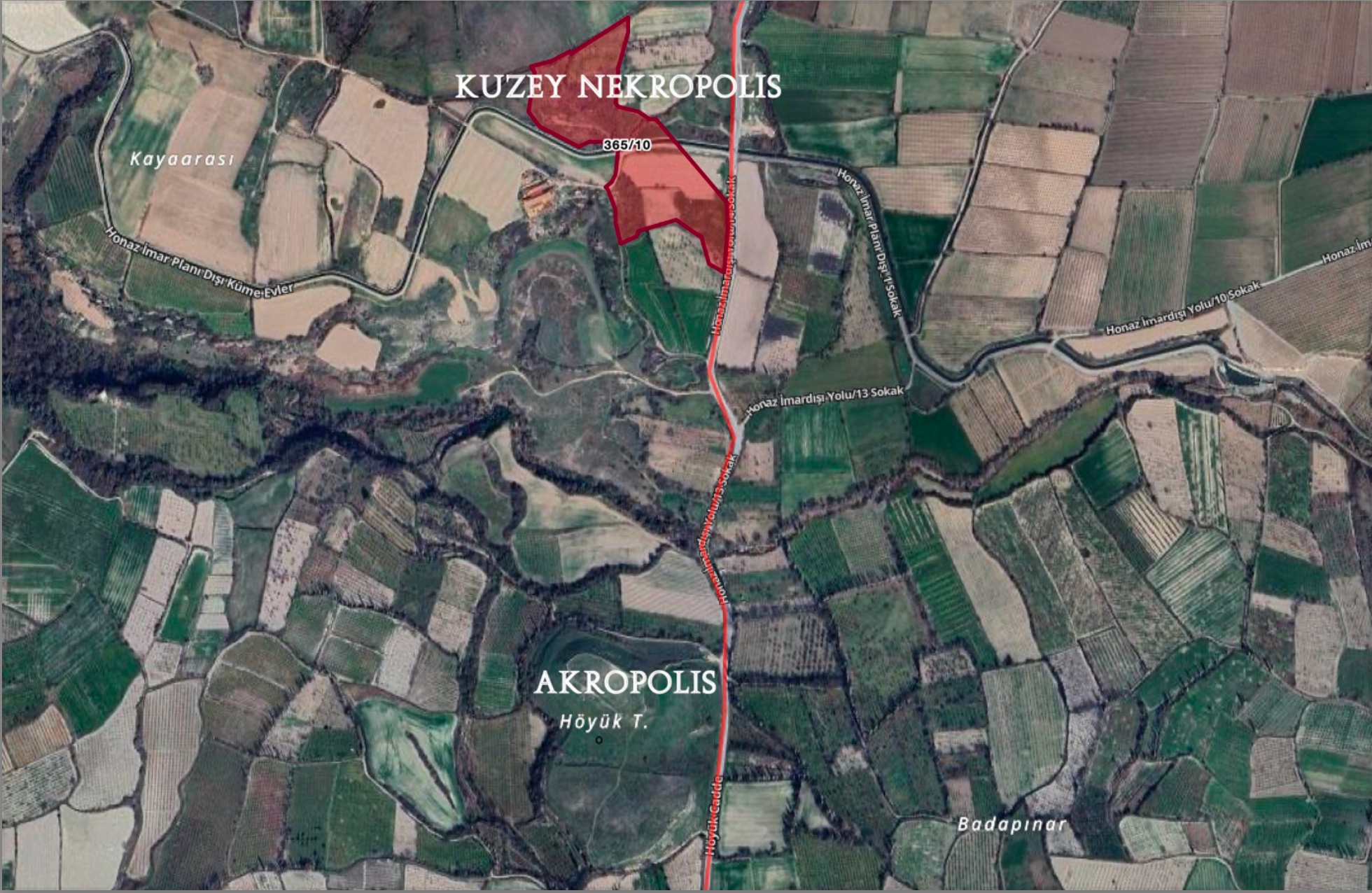
Colossae North Necropolis, Parcel 365/10 (Google Earth Image)
North Necropolis – Parcel 365/10
During the 2025 season, excavations were concentrated on Parcel 365/10, located approximately 800 m from the Colossae Acropolis and owned by the Honaz Municipality. Characterised by a travertine rock formation, this sector represents one of the most densely attested areas of rock-cut trough graves within the North Necropolis.
Prior to excavation, an area of approximately 20,000 m² was carefully cleared of vegetation under archaeological supervision and without mechanical disturbance. This controlled cleaning process aimed to enhance surface visibility and to ensure that documentation and conservation measures could be carried out in a systematic and secure manner.
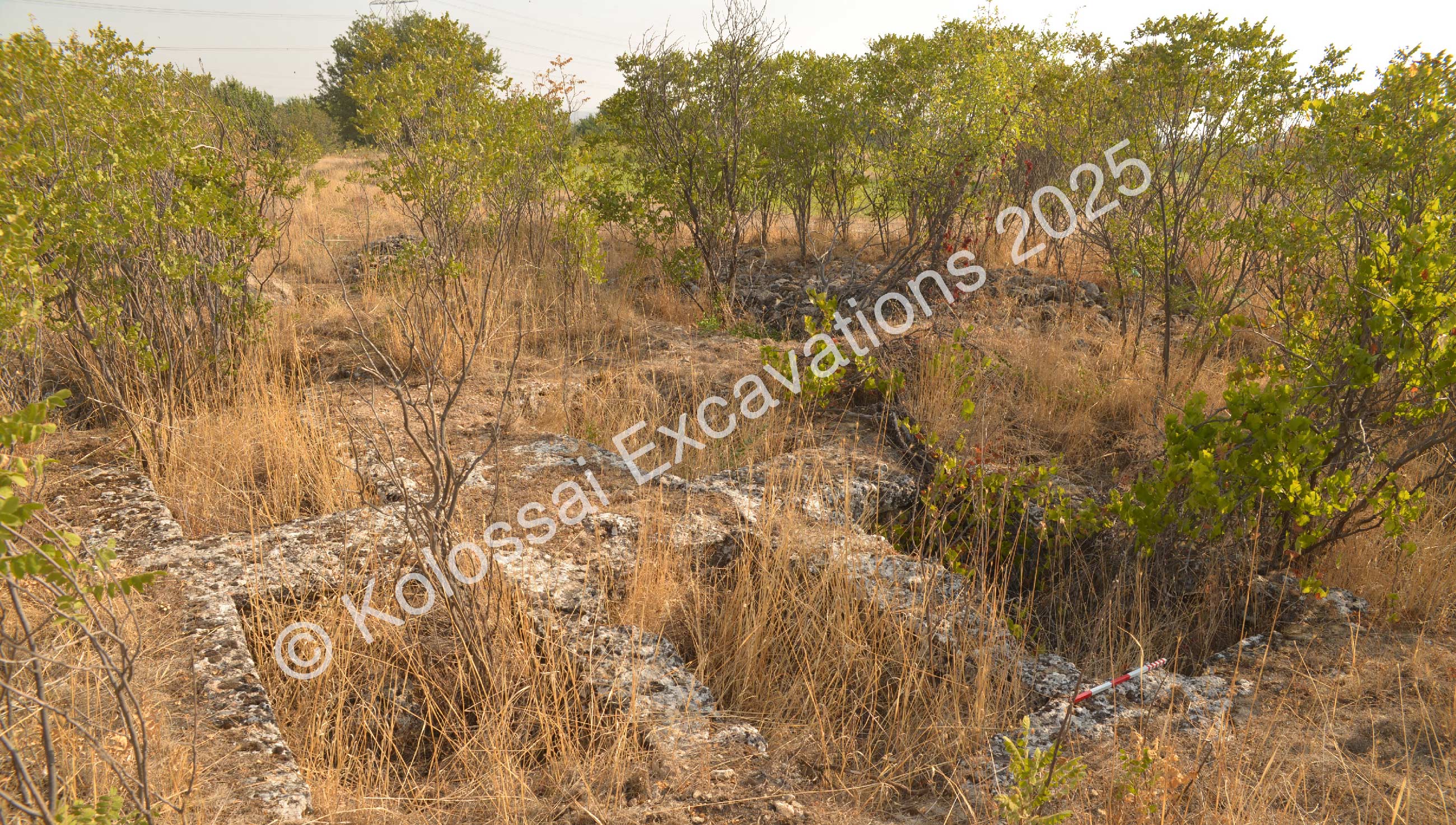
Rock-Cut Trough Graves in the North Necropolis of Colossae
Excavation work was initiated in the northern half of the parcel, taking into account the boundary formed by the irrigation canal running through its central sector. Owing to the logistical accessibility provided by the adjacent stabilized road, the excavation area was gradually expanded from east to west.
Within an area of approximately 550 m², a total of 76 rock-cut trough graves were uncovered. The graves display an adjoining and irregular layout, largely determined by the suitability of the bedrock surface. The extensive destruction of grave covers clearly indicates that the area had been subject to intensive illicit excavations in the past. Nevertheless, in examples that had experienced limited disturbance, stratigraphic relationships within the fill deposits were successfully documented, allowing for controlled contextual interpretation.
In addition, a continuous fracture line was identified on the bedrock surface. This feature was provisionally interpreted as potentially tectonic in origin, and it was noted that further interdisciplinary geological and geophysical investigations would be required to clarify its formation and significance.
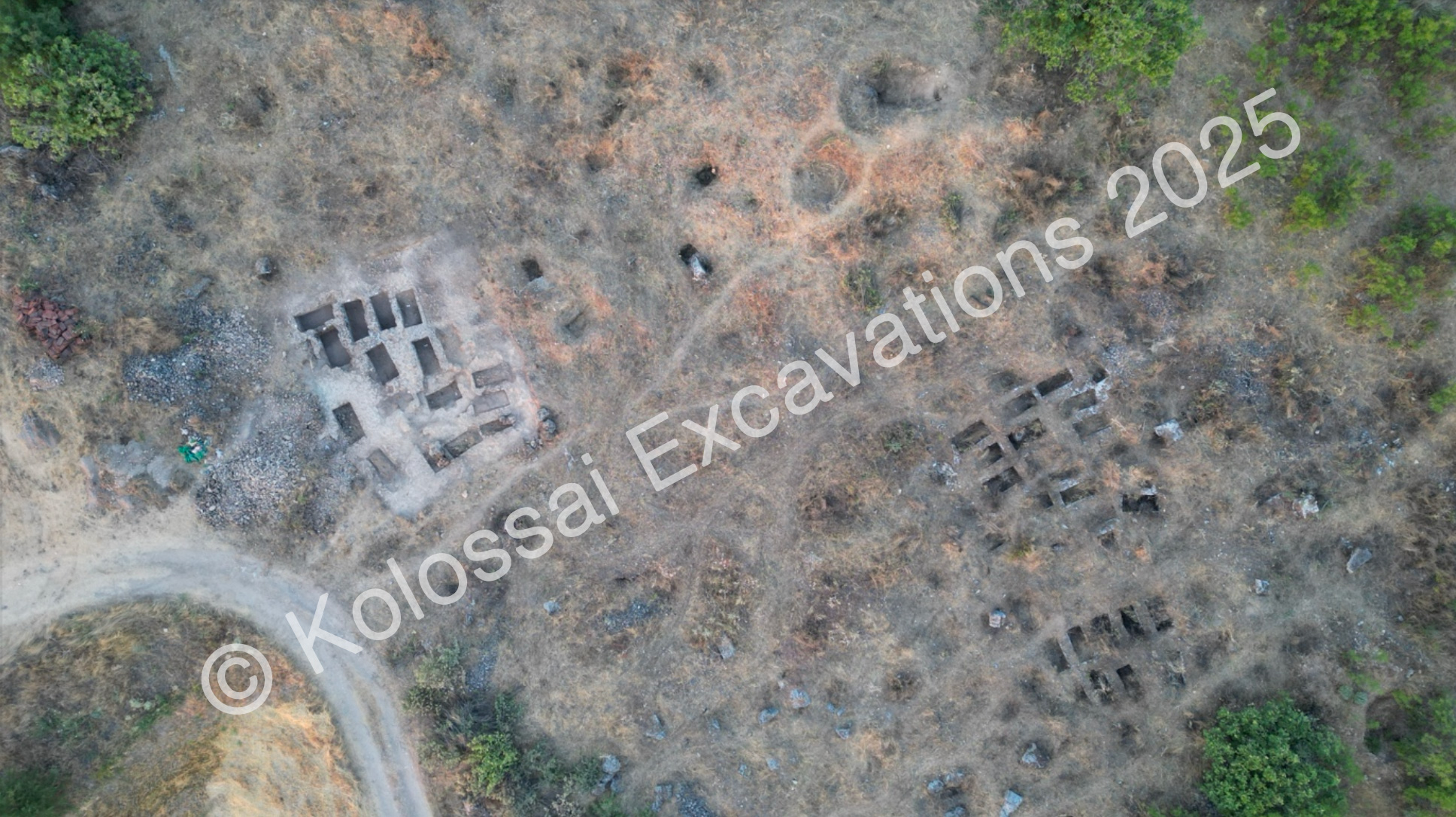
Aerial View of the Rock-Cut Trough Graves in the North Necropolis of Colossae
Across the excavation area, three libation pits were identified. In addition, near the tumulus, a roughly square stone platform and small-scale grave-like arrangements were uncovered.
At the westernmost edge of the necropolis, the previously known tumulus was reached, and its surrounding wall—constructed of travertine blocks with a diameter of approximately 12 m—was fully exposed. The disturbed upper covering and entrance line, damaged as a result of illicit excavations, were carefully documented. Within the interior, the funerary layout was identified as comprising an antechamber and a burial chamber furnished with an L-shaped kline, after which the excavation was completed.
At the end of the season, the looters’ pit at the summit of the tumulus was filled in, and rehabilitation measures were implemented to preserve the structural silhouette and to enhance the overall security of the monument.
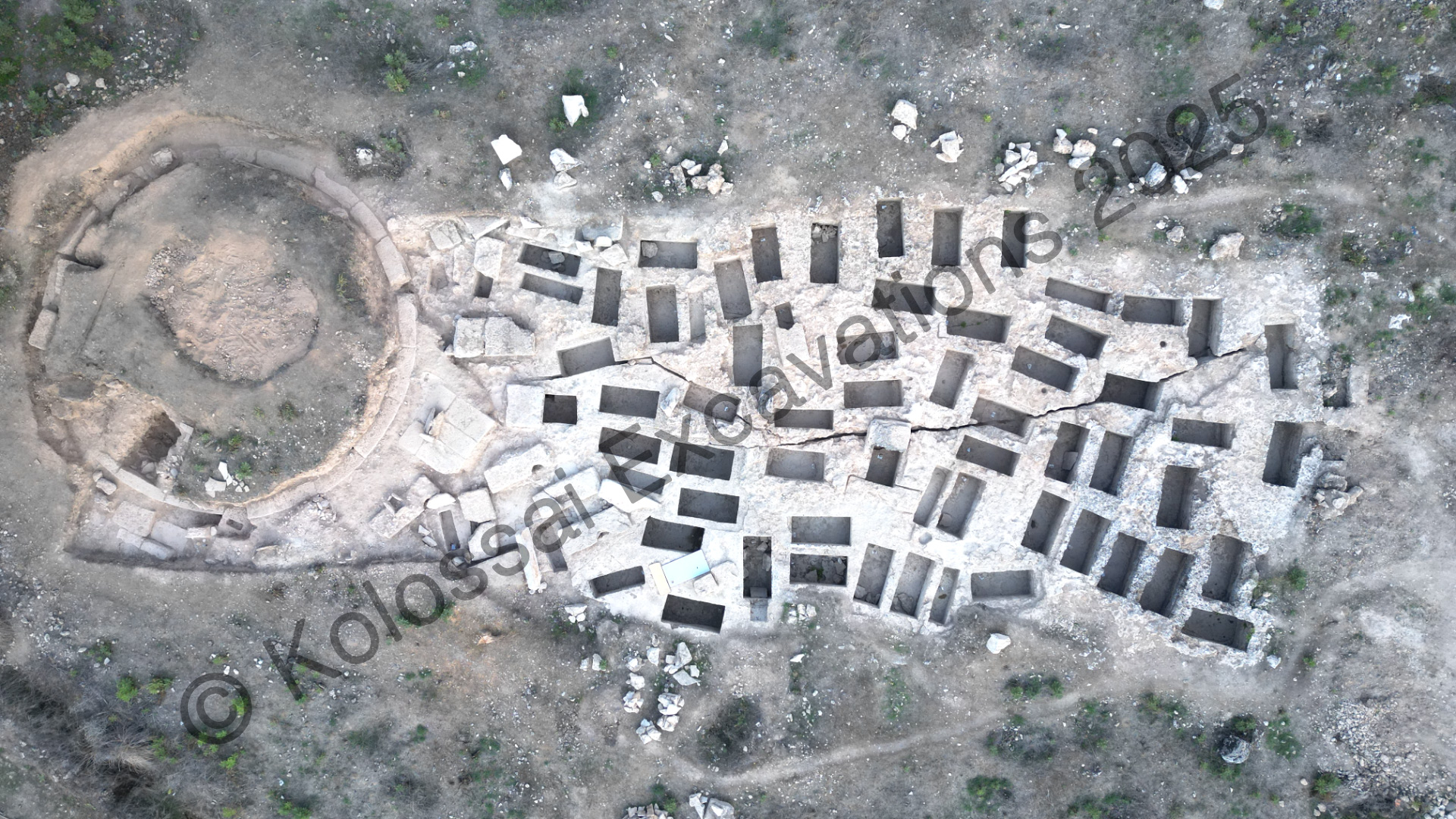
Aerial View of the Colossae North Necropolis after the 2025 Excavation Season
In order to clarify the spatial extent of the necropolis, five 5 × 5 m trial trenches were opened. Rock-cut trough graves were reached in two of these soundings, whereas a marked decrease in burial density was observed in the western and northern sectors.
Small finds recovered during the excavations—including lamps, unguentaria/balsamaria, jewellery, amulets, coins, and various metal fittings—derived from grave interiors and associated burial contexts. All artefacts were recorded through individual find sheets and subsequently subjected to cleaning, stabilization, and conservation procedures.
These data constitute the first systematic scientific dataset concerning the funerary practices, ritual behaviour, and material culture repertoire of the North Necropolis of Colossae.
Conservation, Security, and Infrastructure
To ensure the sustainability of the excavation programme, infrastructure and security measures were implemented concurrently during the 2025 season. In order to accommodate the excavation team and to facilitate office and documentation work, construction of a 400 m² container-based excavation house was initiated on Parcel 365/10. The area was enclosed with perimeter fencing, and a controlled access system was established.
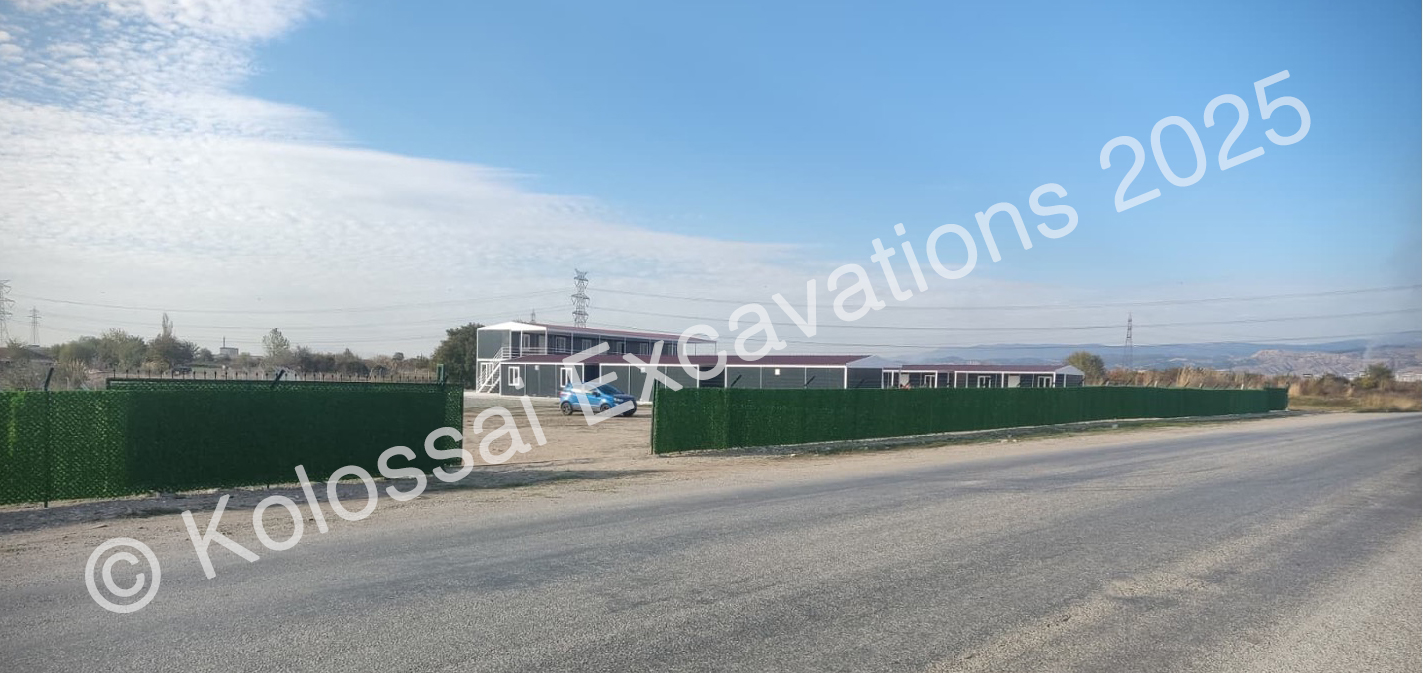
Colossae Excavation House
In addition, the North Necropolis excavation area was enclosed with wire fencing and secured with locked gates. A camera trap surveillance system was installed under the supervision of the Honaz District Gendarmerie Command. These measures have provided a critical security infrastructure—particularly in a necropolis sector exposed to a high risk of illicit excavation—ensuring both the protection of archaeological data and the continuity of systematic documentation.