The economic structure of Colossae derived not merely from its character as an inland valley city endowed with fertile agricultural lands, but also from its integration into a multilayered economic system within the Lykos Valley that interconnected agriculture, animal husbandry, and craft production. The city’s location along the Aksu Stream, at the intersection of water sources descending from the mountain slopes and the alluvial plain, created a favorable environmental setting for primary agricultural production.
These natural conditions were suitable for the cultivation of cereals, fruits, viticulture, and olives. Nevertheless, the principal economic strength of Colossae appears to have concentrated on animal husbandry—closely linked to agriculture—and on textile production based upon it.
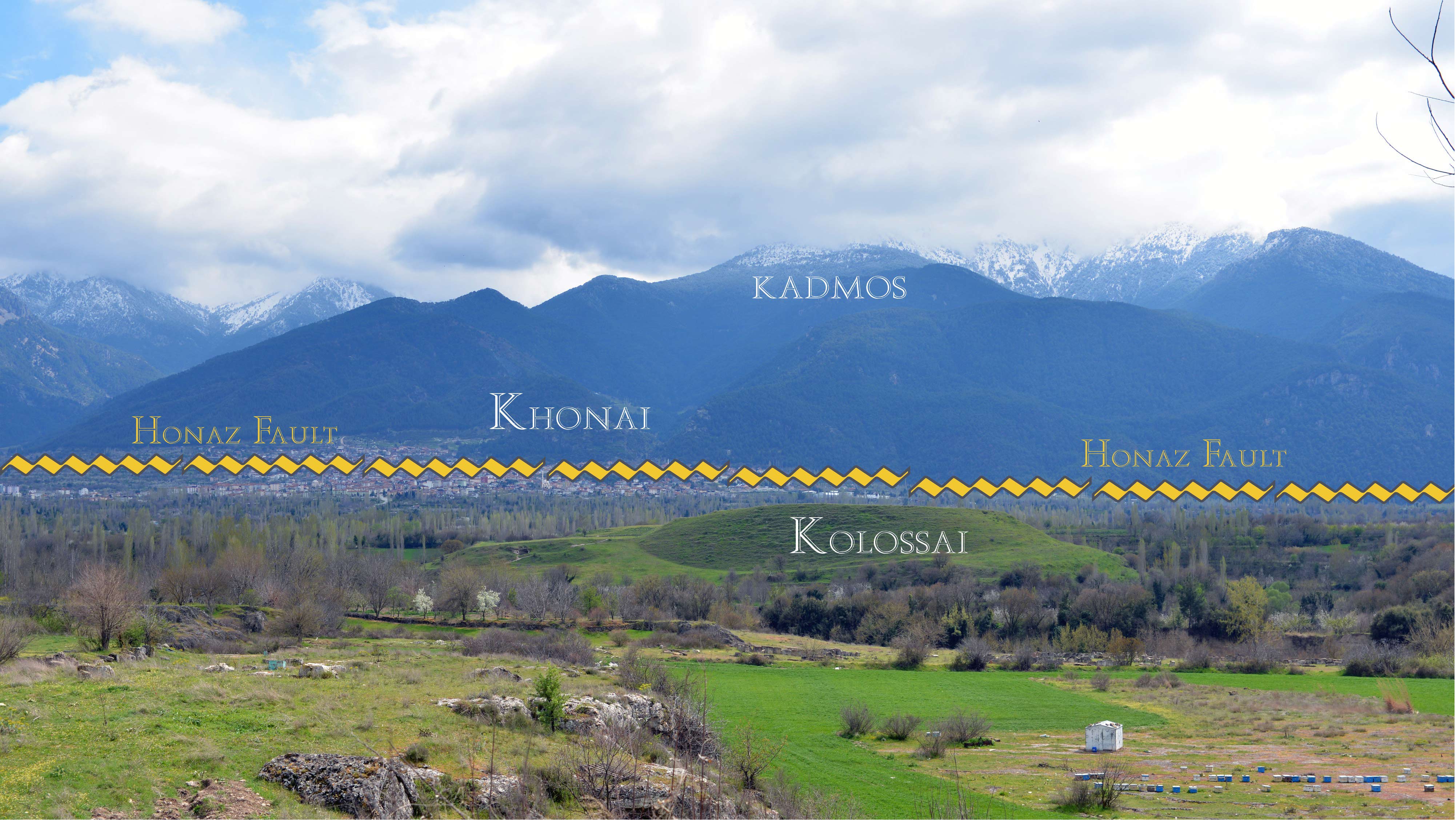
Colossae and Khonai from the North (Photo credit: Colossae Excavation Archive, 2023)
Ancient sources clearly demonstrate Colossae’s position within this economic system. Strabo notes that the raven-black, fine, and soft-fleeced sheep raised in the vicinity of Laodikeia were also found in Colossae and that these animals generated considerable revenue. This statement points not merely to the presence of animal husbandry, but to a specialized production model directly dependent upon the quality of wool.
Even more striking is Pliny the Elder’s association of the term colossinus with a specific color and wool quality. Such usage indicates that Colossae was not simply a production area, but a center whose name became directly identified with textile quality and a distinctive chromatic tradition.

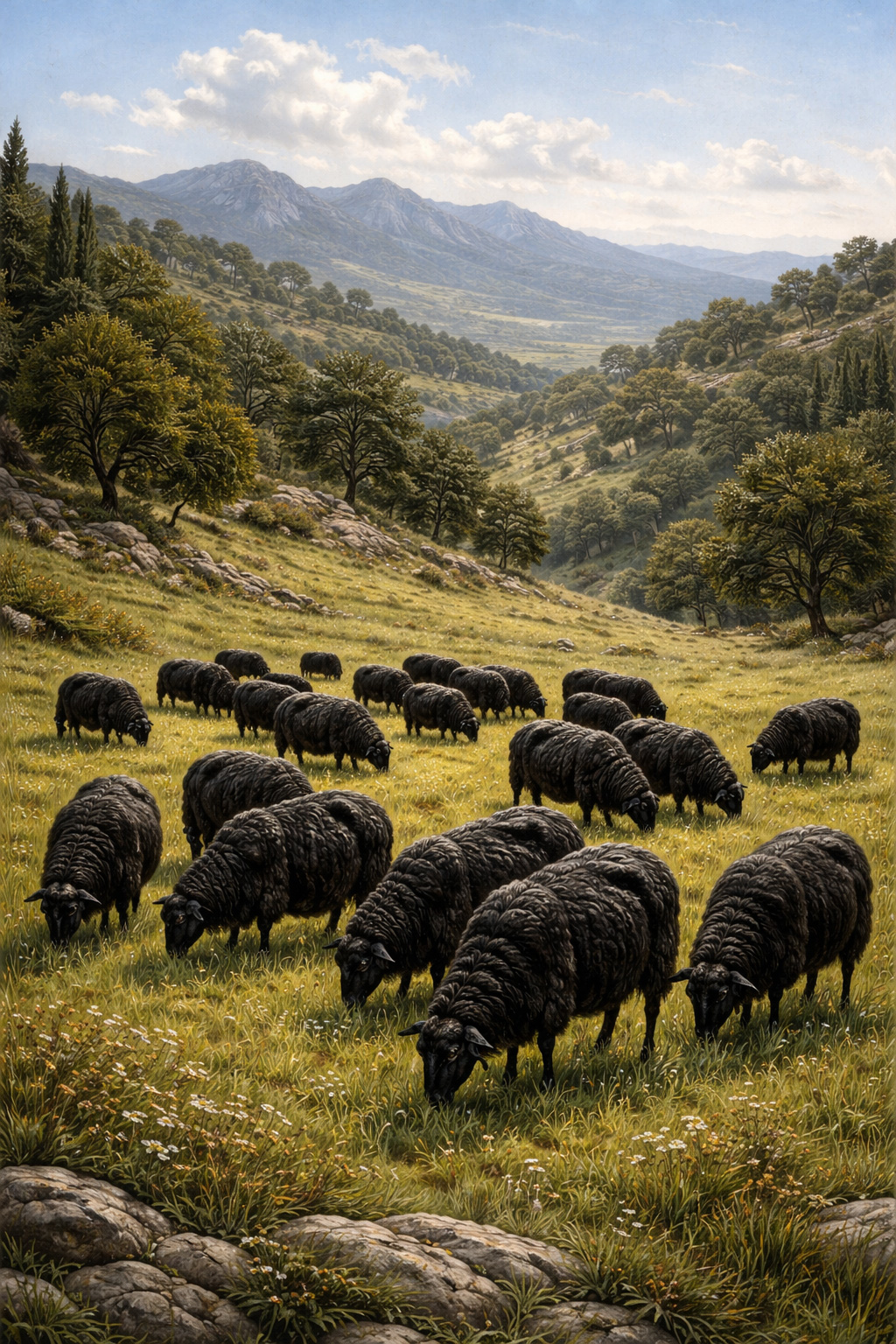
Purple Cyclamen (Raw Material of the Colossinus Dye) Raven-Colored Sheep of the Lykos Valley (AI Visual)
From the Hellenistic Period onward, although the increasing political and urban prominence of Laodikeia on the Lycus and Hierapolis relatively diminished the regional weight of Colossae, the city’s economic function persisted. Colossae continued to exist as part of a tripartite economic core in the Lykos Valley specialized in textile production, together with Hierapolis and Laodikeia.
The dyeing technologies of Hierapolis, supported by its thermal waters, the high-quality black wool of Laodikeia, and the woolen products of Colossae known as colossinum indicate the presence of a complementary production network within the valley. In this respect, Colossae should be understood not merely as a hinterland of sheep breeding, but as a production center where processed woolen goods could be defined and distinguished in terms of quality, color, and commercial value.
The development of the textile sector in the Lykos Valley was connected not only to the region’s natural resources but also to strategic trade routes. Colossae’s position along the inland trade corridor extending in the direction of Sardis–Iconium facilitated the circulation of locally produced woolen goods into broader markets. This situation demonstrates that the city’s economic structure was based not solely on the production of raw materials, but also on the distribution of processed commodities bearing market value.
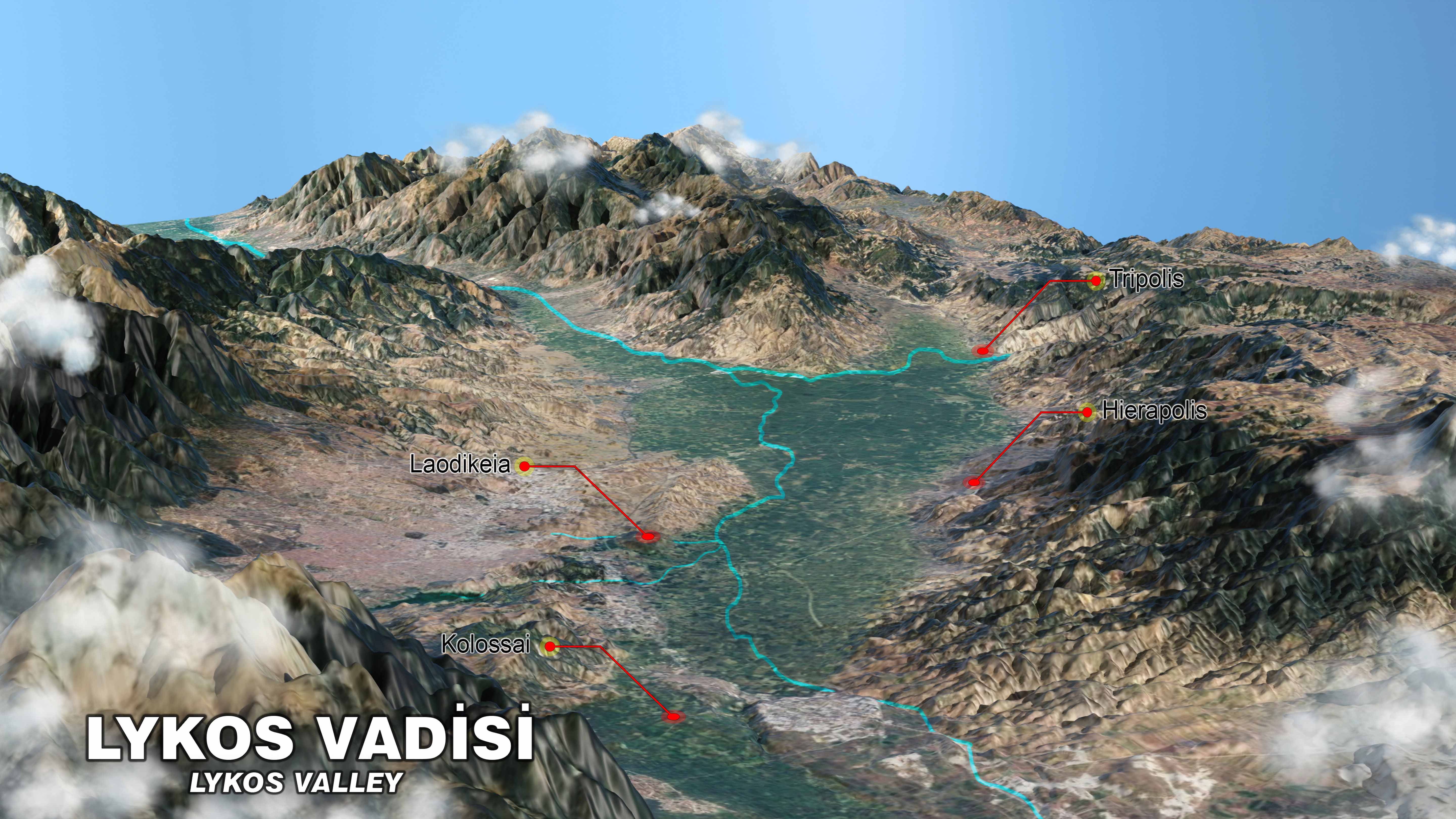
Major Centers of the Lykos (Çürüksu) Valley (Map credit: D. Peçen)
Nevertheless, the economic structure of Colossae and its surrounding territory should not be evaluated solely through the lens of textile production. Agricultural output based on products such as olives and grapes also formed part of the regional economy. However, the available archaeological and epigraphic evidence suggests that olive oil and wine production possessed a more limited commercial visibility in comparison to textiles. These forms of production appear to have been sustained primarily within the framework of rural farmsteads and small-scale enterprises, whereas textile manufacture relied upon a far more organized and specialized labor network.
Epigraphic documents referring to numerous specialized occupational groups—such as wool washers, wool workers, weavers, dyers, and purple-dye specialists—demonstrate that textile production in the Lykos Valley constituted a systematic and institutionalized economic activity. At the foundation of this production system stood small-scale pastoralism. Consequently, the region’s economic stability depended not only on agricultural productivity, but also on the continuity of a pastoral structure grounded in sheep breeding.
In conclusion, the economic potential of Colossae must be explained not merely by its fertile lands and abundant water resources, but by a production system capable of transforming these natural advantages into high-quality wool, organized labor, and commercial circulation. Although agriculture, olive cultivation, and viticulture were significant, the city’s distinctive economic identity—clearly reflected in ancient sources—was rooted in wool and textile production. In this respect, Colossae emerges within the Lykos Valley not simply as an agrarian settlement, but as a distinguished production center whose name became directly associated with product quality.