Archaeological surveys in the Ancient City of Colossae and its territorium have been conducted by Pamukkale University since 2021, under the directorship of Asst. Prof. Dr. Barış Yener, with the permissions granted by the General Directorate of Cultural Heritage and Museums of the Republic of Türkiye, Ministry of Culture and Tourism. Carried out over three seasons, these investigations aimed to define cultural stratification within the micro-region of Colossae, to reconstruct the chronological development of the settlement, and to evaluate the city’s acropolis, necropolis, lower city, and territorium in an integrated manner. The research was implemented within an interdisciplinary framework that jointly considers human–environment interactions, settlement patterns, production and exchange networks, and the evidence of material culture.
2021 Season
The 2021 season focused on the acropolis, the northern and northwestern necropolis areas, and the immediate surroundings of the city. The double-conical hill locally known as “Höyük” was identified by the research team as the acropolis, where a systematic intensive surface survey was undertaken. By applying a grid system on the upper terrace of the acropolis, surface ceramic finds were documented and assessed with recorded coordinates. These investigations established a continuous chronological sequence ranging from the Late Chalcolithic Period through the Early, Middle, and Late Bronze Age, the Iron Age, the Hellenistic, Roman, Byzantine, and Seljuk periods.
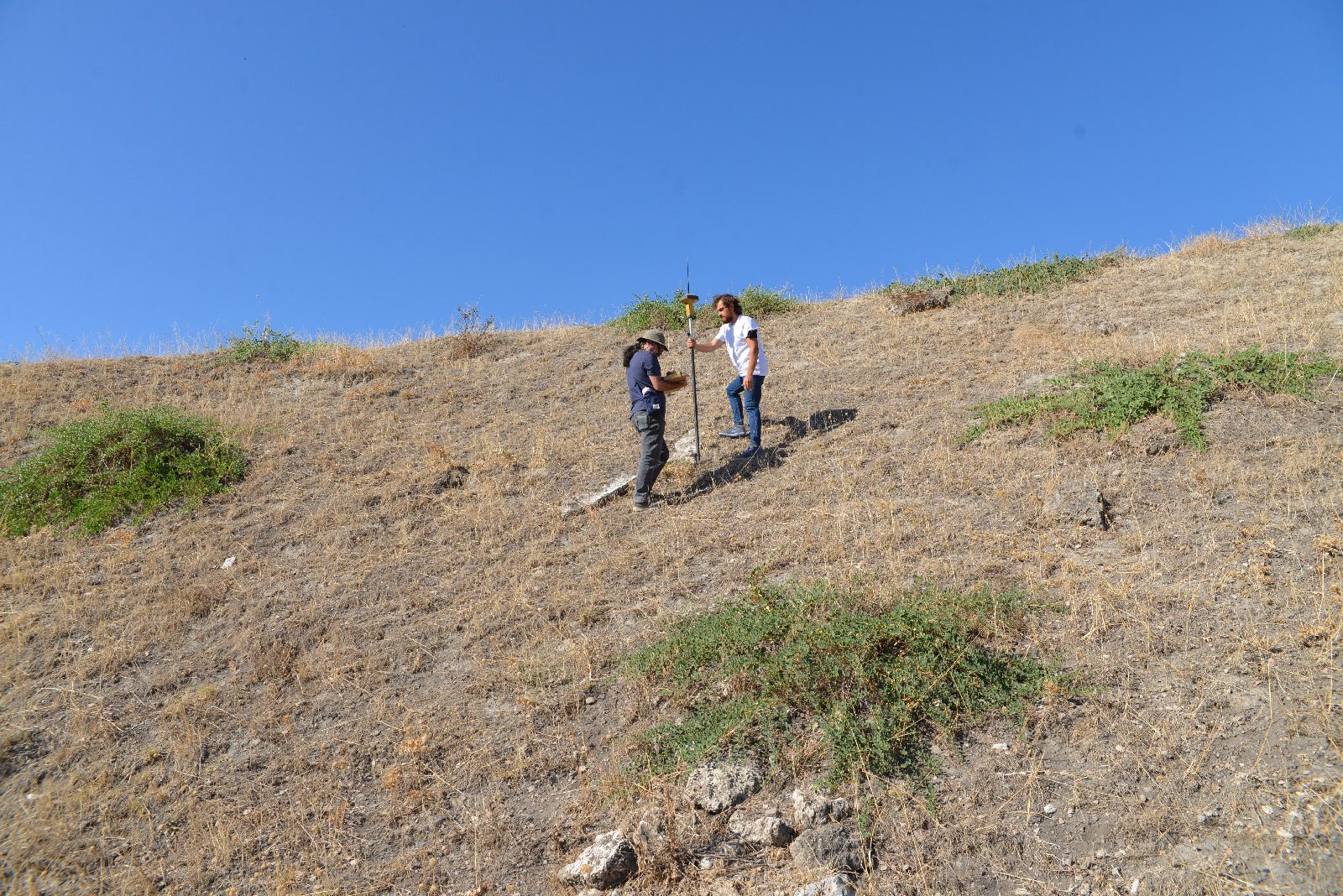
2021 Topographic Survey and Mapping Studies at Colossae (Asst. Prof. Dr. Polat Ulusoy – Archaeologist Tolga Abalı)
During the same season, the architectural blocks visible on the acropolis were documented topographically, and it was determined that the upper terrace had been enclosed by a distinct fortification line. Traces of comparable defensive arrangements were also identified on the lower terraces. The theatre, the most prominent structure discernible on the surface of the city, was measured in detail; its cavea form, outer wall alignments, and the preserved seating rows were systematically recorded for the first time.
Another major component of the 2021 season consisted of investigations in the necropolis areas. Across the extensive zone extending to the north, northeast, and northwest of the acropolis, numerous rock-cut tombs, tomb covers, funerary stelae, rock-cut chamber tombs, gabled-roof tombs, and tumulus-type burials were documented. The diversity of tomb types identified particularly within the northern necropolis demonstrates both the richness of Colossae’s funerary traditions and the broad spatial extent of its burial grounds. Surveys conducted along the Aksu Valley further recorded multi-chambered rock-cut tomb complexes, including newly identified examples bearing traces of fresco decoration on their interior walls.
In the southern sector of the lower city settlement, investigations revealed architectural blocks, extended wall lines, and remains associated with water management systems. The 2021 season thus provided essential data demonstrating that Colossae possessed an extensive urban landscape comprising an acropolis, necropolis areas, and a lower city.
2022 Season
The 2022 season aimed to expand upon the results of the previous year and was carried out on the eastern terrace of the acropolis, in the vicinity of the theatre, along the Aksu Valley, in the southern sector of the lower city settlement, and around Emirazizli and Kümbet Tepe. One of the most significant developments of this season was the geophysical investigations (ground-penetrating radar) conducted on the upper terrace of the acropolis. Surveys covering approximately 4,584 m² revealed architectural remains located immediately beneath the surface, the majority of which extend along a southeast–northwest axis.
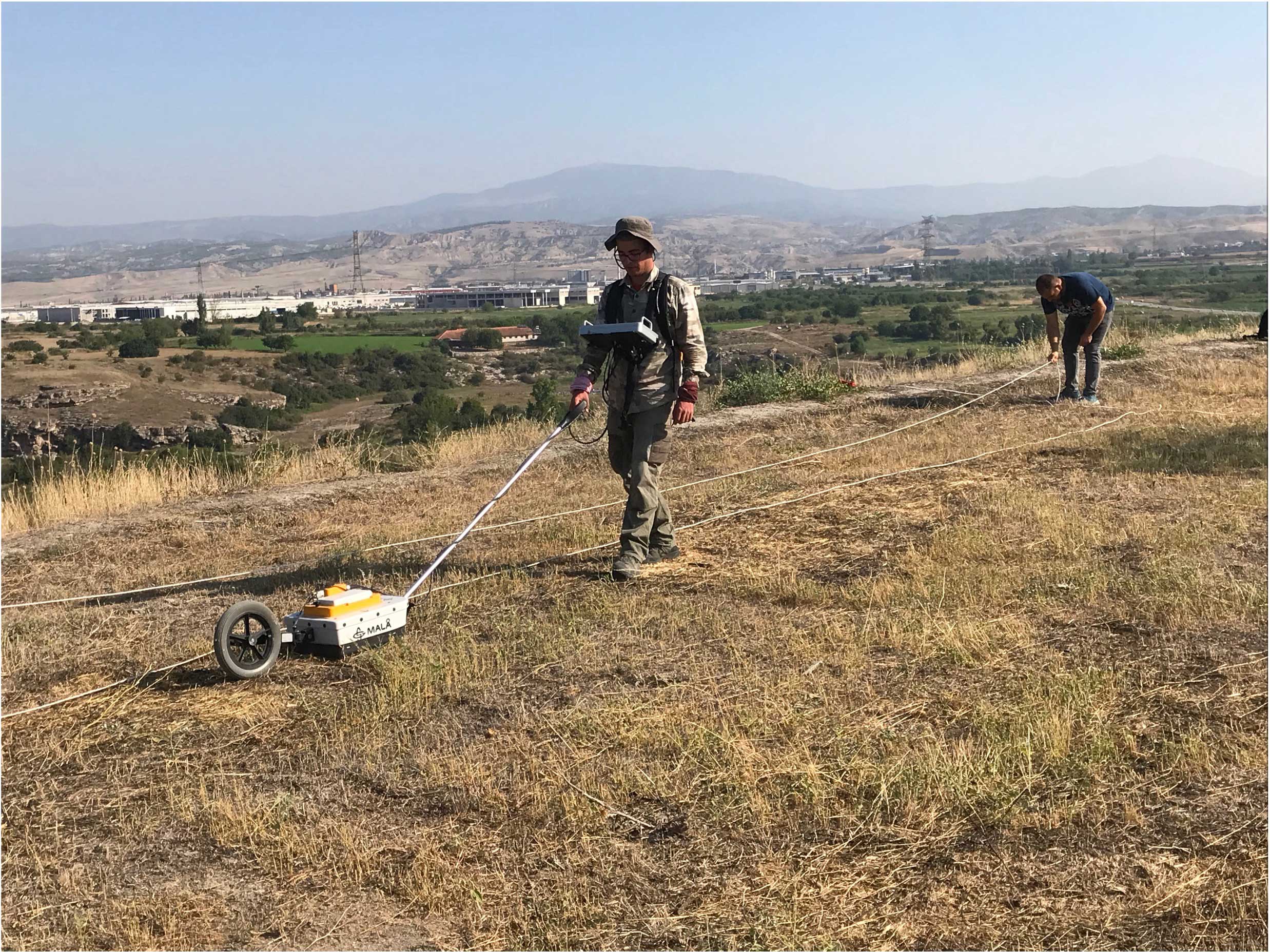
GPR (Ground-Penetrating Radar) Investigations on the Acropolis of Colossae (Assoc. Prof. Dr. İrfan Akça – Geophysical Engineer Seçkin Sertaç Lallı)
Intensive pedestrian surveys conducted on the eastern terrace of the acropolis and in the vicinity of the theatre made significant contributions to the reconstruction of the city’s chronology. The ceramic assemblage evaluated from these areas indicates a continuous sequence of occupation extending from the Late Chalcolithic Period to the Byzantine Period. While Hellenistic, Roman, and Byzantine wares are numerically predominant, examples dating to the Middle and Late Iron Age were also documented. These results demonstrate that the eastern terrace constituted an actively utilized sector within the settlement system of Colossae.
The coins recovered during the 2022 season are likewise noteworthy. A specimen attributed to the Byzantine Emperor Michael VII Doukas and a coin struck in the name of the Seljuk Sultan Kılıç Arslan II provide tangible archaeological evidence for Late Antique and early Turkish-period activity in the Colossae/Khonai region.
Extensive pedestrian surveys carried out along the Aksu Valley resulted in the documentation of numerous architectural blocks. In addition, a largely well-preserved single-arched Roman bridge spanning the Aksu River was measured and recorded in detail. Opposing wall remains identified to the east of the valley may correspond to a second bridge structure.
Investigations undertaken in the southern sector of the lower city settlement yielded dense ceramic assemblages dated primarily to the Hellenistic and Roman periods, alongside more limited finds belonging to the Iron Age and the Ottoman period. A marble fragment belonging to a female statue discovered in this area constitutes an important indicator of public or monumental architecture in the southern sector of the settlement.
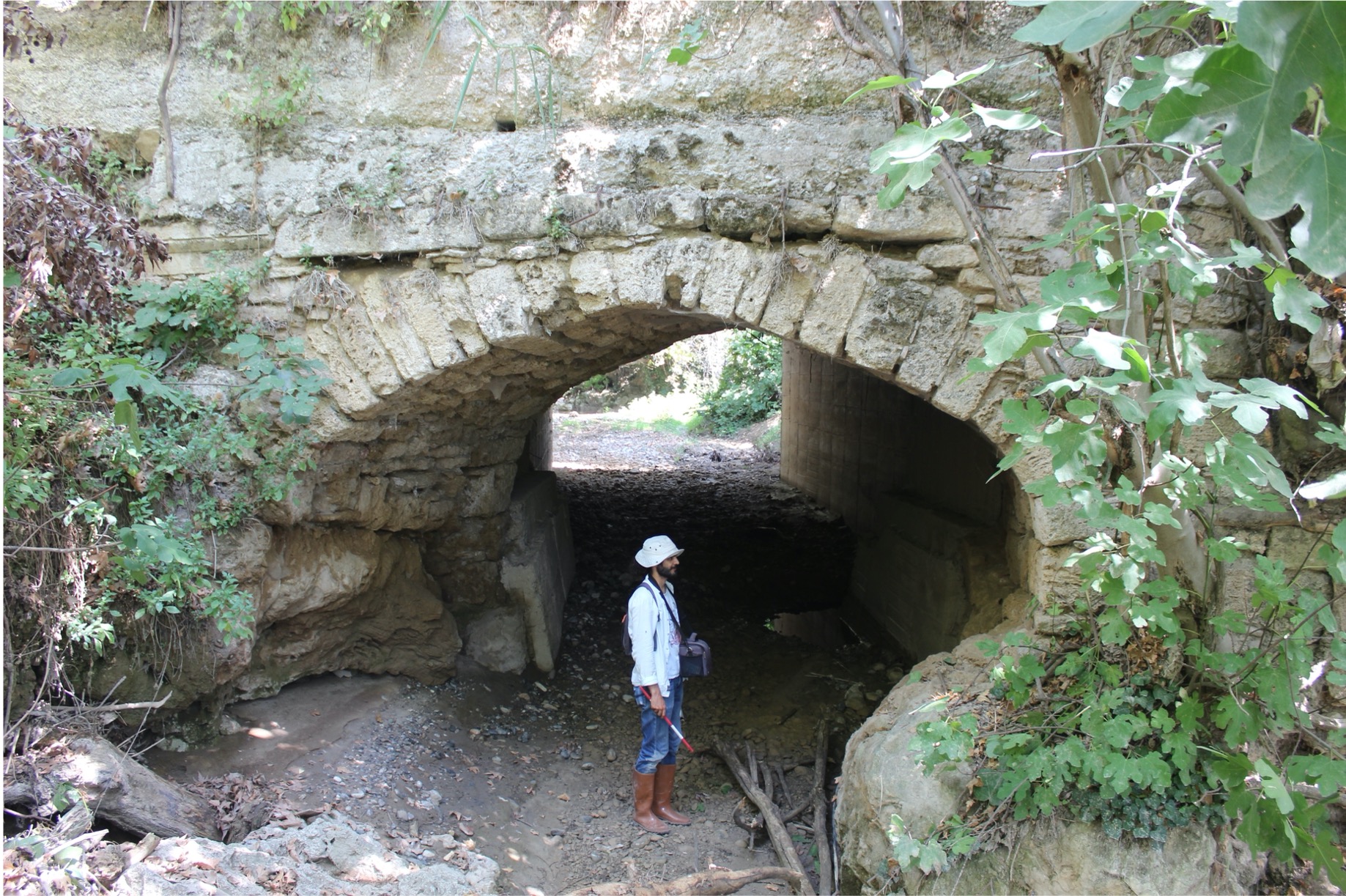
Roman Bridge over the Aksu Stream (Photo Credit: Colossae Excavation Archive, 2022)
Preliminary investigations carried out in the Emirazizli neighbourhood and around the Kümbet Tepe necropolis constituted some of the most noteworthy results of the 2022 season with regard to the territorium. Within the village, reused architectural elements—including column shafts, bases, and capitals—were documented; moreover, examples of orbis and litus, potentially associated with olive-oil production, were identified. The rock-cut tombs recorded at Kümbet Tepe, together with ceramic material ranging from the Iron Age to the Byzantine period, indicate that this area warrants more detailed investigation in future research.
2023 Season
The 2023 season concentrated on the southern terraces of the acropolis, the geophysical survey zones, and the southern sector of the lower city settlement, with the aim of refining and expanding the results obtained in previous seasons. The principal area of work was an approximately 7,000 m² sector located to the south of the upper part of the acropolis, designated “South Terrace 1.” Intensive surface survey conducted in this area resulted in the evaluation of a total of 2,200 pottery sherds and established a new continuous chronological sequence spanning from the Late Chalcolithic Period to the Byzantine Period. The marked increase in Iron Age material, in particular, provided stronger evidence for the early phases of occupation at Colossae.
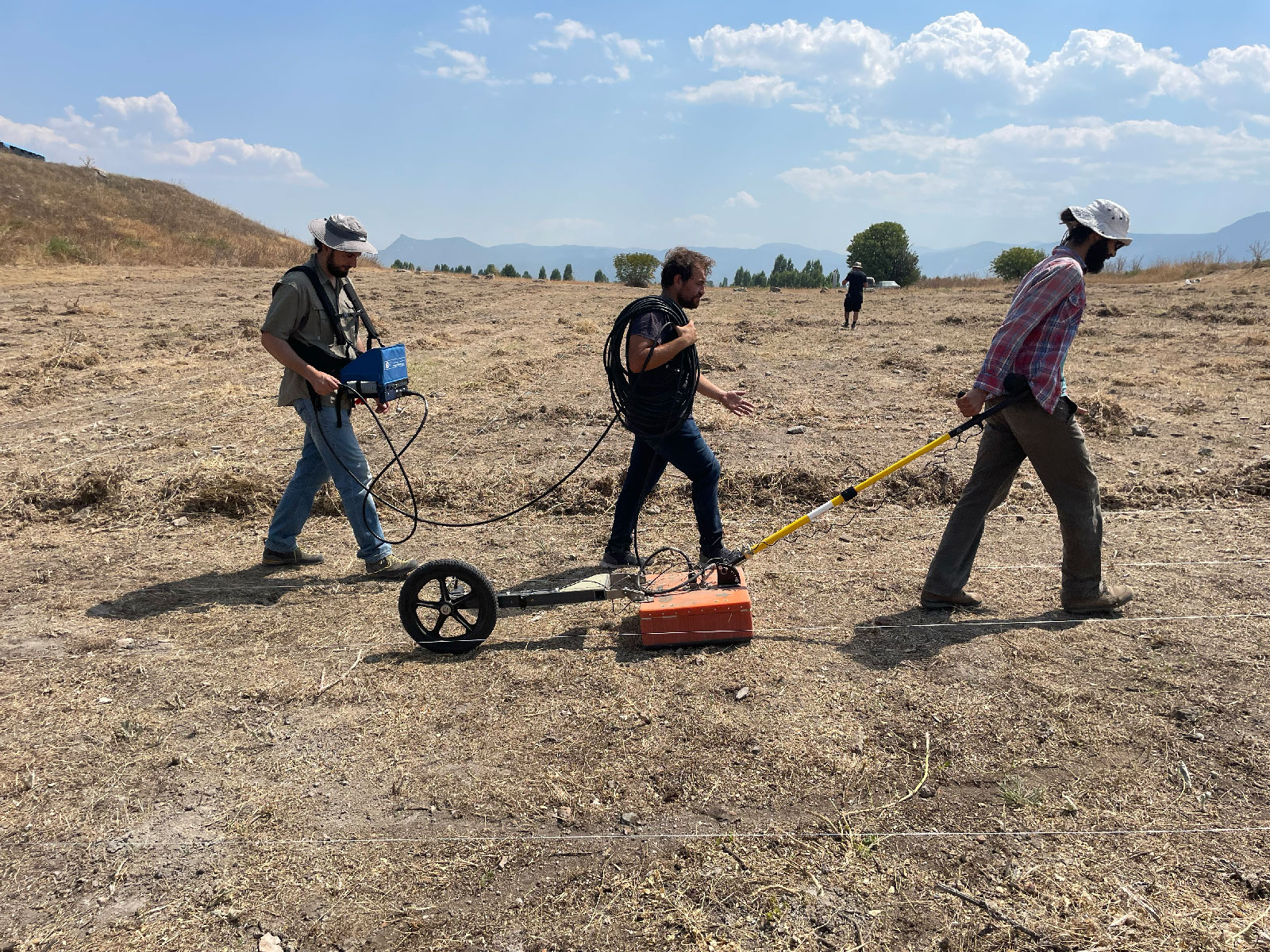
GPR (Ground-Penetrating Radar) Investigations on the South Terrace of the Acropolis (Archaeologist Doğan Peçen – Archaeologist Tolga Abalı – Archaeologist Muhammed Ergenç)
One of the most significant components of the 2023 season was the new geophysical investigations (ground-penetrating radar) carried out on the southern terraces of the acropolis. A total area of approximately 8,500 m² was surveyed across South Terrace 1 and, in part, South Terrace 2. The results identified an extensive architectural fabric beginning at c. 0.5 m below the surface, largely composed of adjoining rooms. These data clearly demonstrate the presence of a well-preserved built environment in the southern sector of the acropolis that is not visible on the surface. Accordingly, the results provided an important preparatory basis for subsequent excavation work.
A Roman-period figural lamp recovered in 2023 constitutes one of the most notable small finds of the season. Featuring depictions of a stork and a snake on the discus, the lamp was assessed as a particularly significant example in both iconographic and chronological terms. In addition, a coin of the reign of Constantius II was found in the southern part of the lower city settlement, providing further evidence for Late Antique activity.
During work conducted in the southwestern sector of the lower city settlement, a new segment of the travertine pipeline system supplying water to the city was documented. This installation, understood to be associated with the spring locally known as “Dedepınarı,” is significant evidence for Colossae’s developed water infrastructure. Comparable to the travertine pipeline systems widely attested in the cities of the Lycus Valley, this discovery has refined our understanding of urban water management at Colossae.
As a result of the 2023 assessments, it became clear that the ceramic data collected between 2021 and 2023 extend the chronology of Colossae further back, to as early as the Early Chalcolithic. Moreover, the traditional view that the city declined in importance during the Hellenistic period was re-examined; the surface assemblage indicates that Colossae continued to function as a substantial centre of production and settlement during this period.
General Assessment
The surface surveys conducted between 2021 and 2023 made it possible to reconstruct the history of Colossae—long evaluated largely through written sources and limited surface observations—on the basis of tangible archaeological evidence. Over three seasons of fieldwork, the city’s multi-layered chronology, extending from the Late Chalcolithic through the Byzantine and Seljuk periods, was documented; moreover, the settlement fabric across the acropolis, necropolis, lower city, and territorium was delineated for the first time in a systematic, georeferenced, and holistic manner.
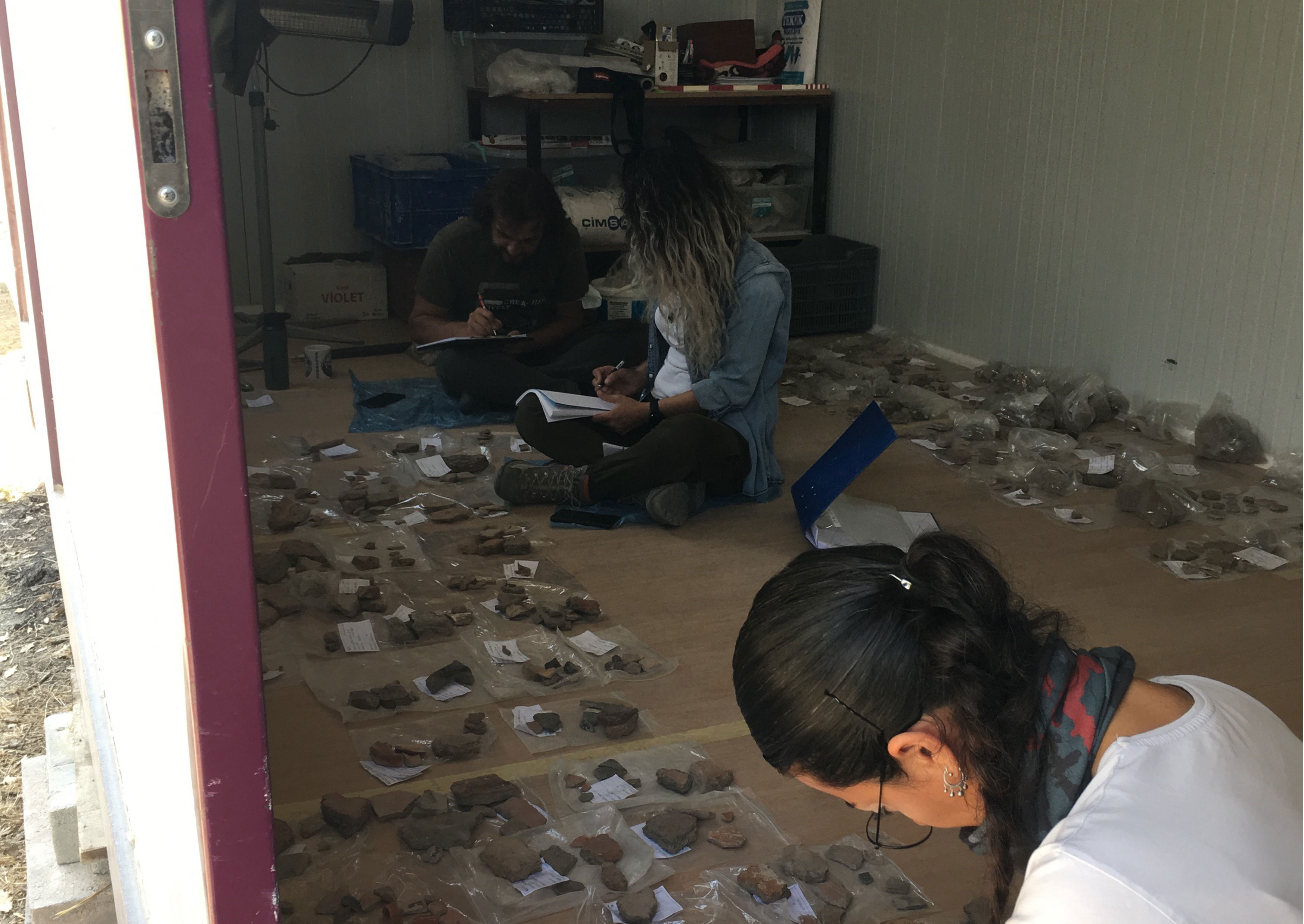
Classification and Dating Studies of the Colossae Surface Ceramics (Dr. Şeniz Yener – Archaeologist Deniz Etik – Archaeologist Tolga Abalı)
These investigations aimed not only to document visible remains, but also to achieve a detailed understanding of Colossae’s archaeological topography through remote sensing, geophysical prospection, ceramic assessment, architectural recording, and small-find analyses. In this way, the surface surveys provided the scientific foundation for the excavations initiated in 2025, while also generating the essential data required for the site’s long-term protection and management.