MONUMENTAL NYMPHAEUM
The excavation was carried out in 2016, 2018-2019 campaigns. These excavations unearthed 900 architectural blocks. Since 2020, restoration works have started. The stüdy and the graphic recomposition of the monument goes together with the development of the restoration project. The Monumental Fountain is of great importance in terms of analyzing the transformations in construction technology between the Roman imperial and Byzantine periods.
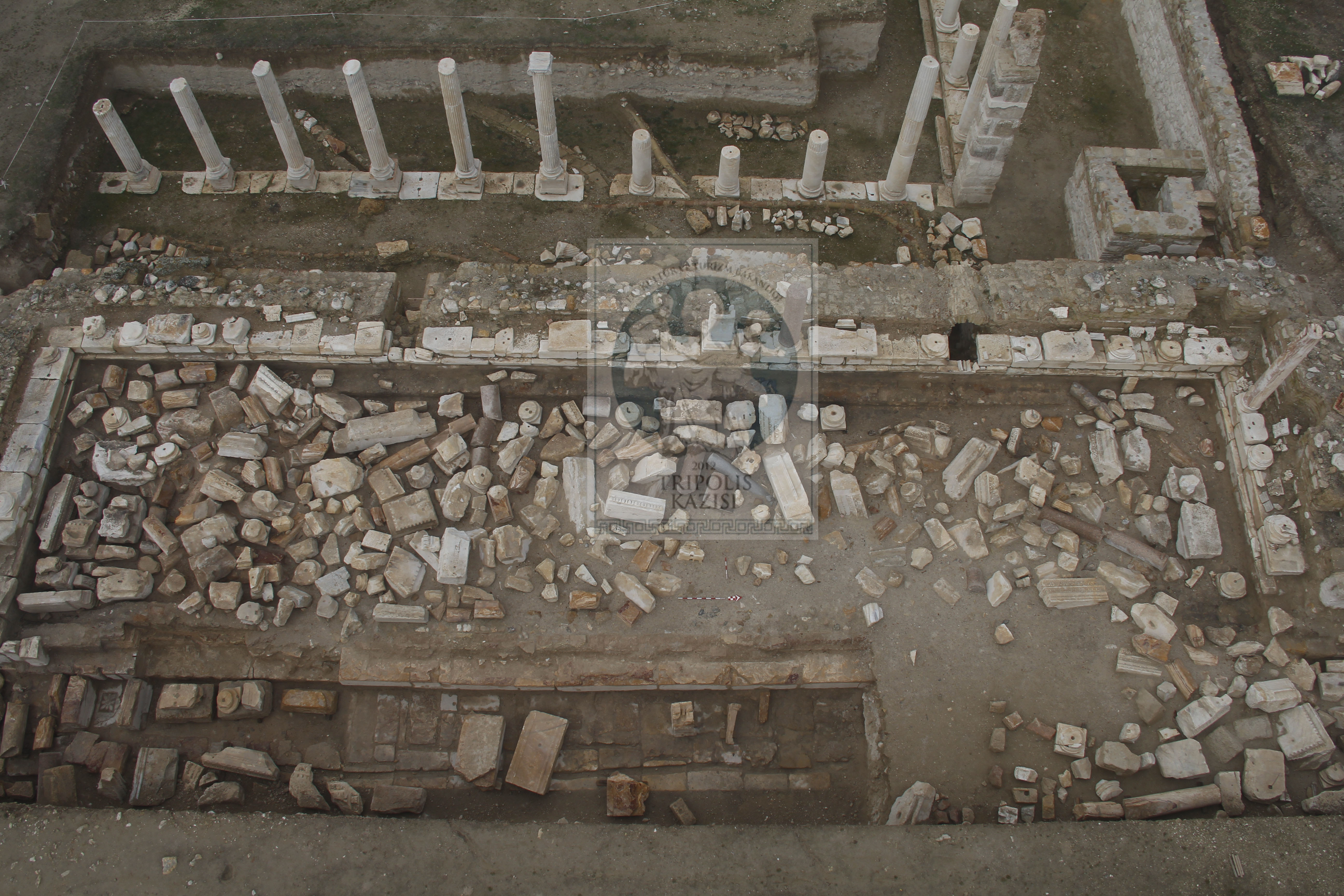
The 15 m. high Monumental Fountain, built in the architectural defined Ionian, Corinthian and Composite order, has a three-storey façade and a very large pool. in addition to its magnificent appearance, it is perhaps the most important of the prestigious structures symbolizing the power of Tripolis. Marbles and granites brought from Dokimeion in Afyon İscehisar, Denizli Yenişehir, Çanakkale Kestanbol, Marmara Island, Aswan in Egypt and Larisa in the Thessaly Region of Greece were used in the construction of the building, especially the multi-colored Banded Travertine, the local stone of Tripolis.
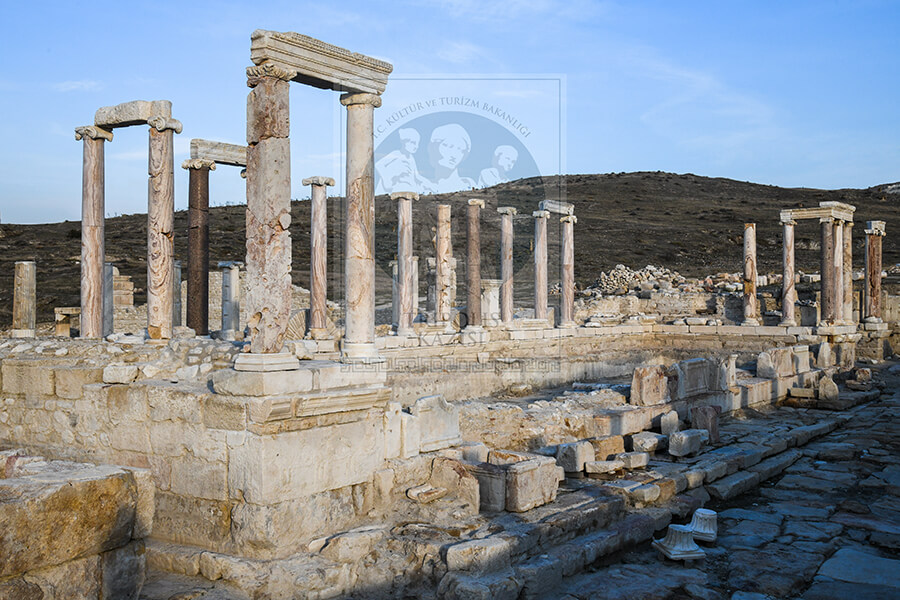
From the data collected so far, the structure dates back to the first quarter of the 2nd century AD. This Phase was followed by a first important restoration, which also affected the façade, to be placed in the Severian period. Probably following the earthquake of 494 AD, the southem half ofthe Nymphaeum collapsed from its foundations and in the first half of the 5th century. it underwent a radical reconstruction, both of the wall structures and of the facade. 5th century restoration involve a dramatic transformation of the 2nd century marble facade, with the reuse of blocks in completely different positions from the original ones.